

Decentralize the World from Your Living Room
There is a cold war being waged in the shadows, and it is for the very soul of Bitcoin.
When the Genesis Block was mined, the vision was elegantly simple: "One CPU, one vote." It was designed to be a peer-to-peer network maintained by the people, for the people. But as the network grew, so did the financial incentive to capture it.
Today, on one side of this war, you have the "Industrial Complex." These are massive, publicly traded mining corporations backed by Wall Street. They operate warehouses the size of football fields in Texas and Iceland. They have lobbyists in Washington. They answer to boards of directors and ESG mandates.
And because they are so massive, they are visible. Because they are visible, they are easy targets for state-level regulation, coercion, and censorship.
On the other side of this war? You.
The Existential Threat of Centralization
If the hashpower of the network becomes too centralized, we risk the ultimate fatal blow: the "51% Attack." This occurs when a single entity—or a small cartel of heavily regulated corporations—controls enough of the network's computing power to rewrite history, reverse transactions, or blacklist specific wallet addresses.
If all the mining power is consolidated into three massive companies, or geographically locked within the borders of a single hostile nation, Bitcoin loses its primary value proposition. It ceases to be permissionless. It becomes just another heavily regulated banking app, wearing a decentralized mask.
The "Swarm" Defense: Guerilla Hashrate
You might look at a solo miner pushing 55 KH/s on your desk and think it is completely insignificant against an industrial Exahash facility. But you are looking at the battlefield wrong.
You are not a direct competitor. You are a guerilla unit.
Imagine one million NerdMiners and Bitaxes distributed across bedrooms, home offices, and basements in 150 different countries. They are running on standard home Wi-Fi. They cannot be shut down by a government cutting the power grid to a single industrial park. They keep the network distinct, distributed, and brilliantly wild.
ROE: Return on Ethos
Let us address the elephant in the room: You are probably not going to get rich running a micro-miner.
Buying a NerdMiner or a Bitaxe isn't about traditional ROI (Return on Investment). If you are looking for guaranteed passive income, buy a bond. If you plug in a solo miner, you will likely never financially break even on the hardware cost—unless you hit the astronomical odds of the solo-mining lottery.
But that isn't why we plug them in. It’s about ROE—Return on Ethos.
It is a $50 vote of confidence in a decentralized future. It is a physical, glowing monument on your desk reminding you that you are part of the most peaceful, profound financial revolution in human history. Even if you never find a block, your device is a tiny soldier holding the line.
You are not buying a money printer. You are paying for the privilege of securing the hardest money ever invented. Plug it in. Let it run. Keep the network free.
Vote For Ethos
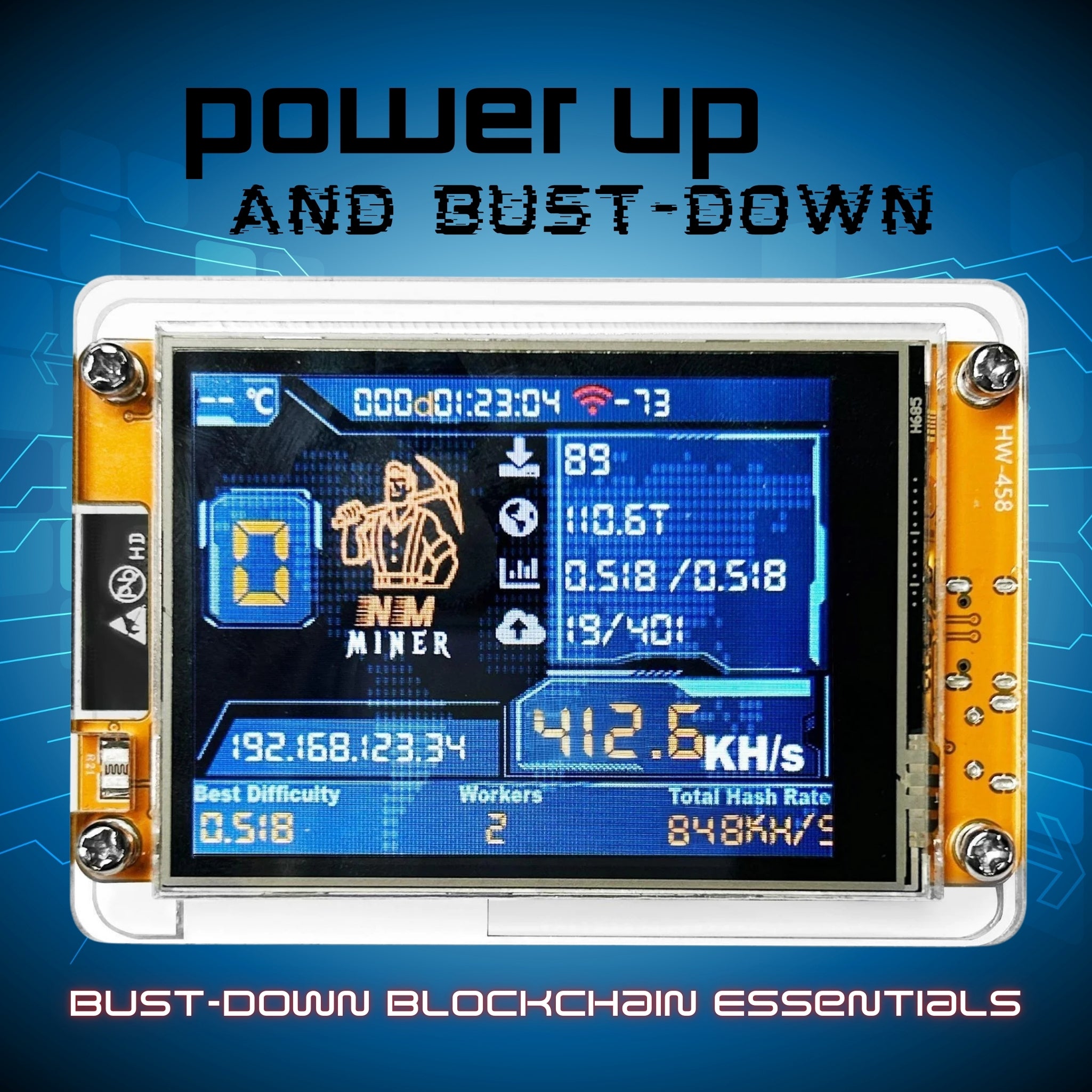
Your physical vote for a decentralized future. Secure the network from your desk.
The Guerilla Unit
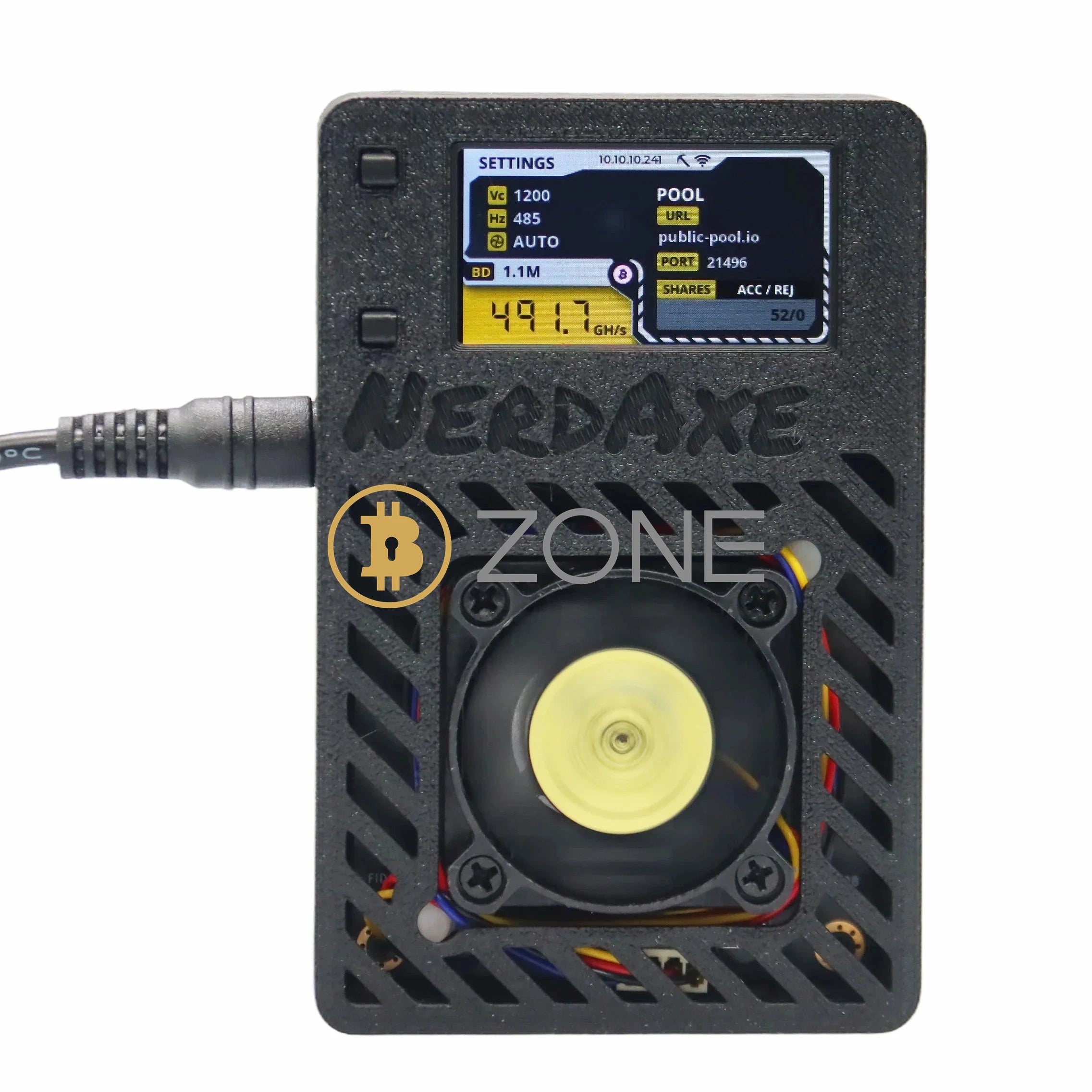
Step up your commitment. Push up to 500 GH/s and secure permissionlessness with ASIC power.