Bust-Down Books
American Eclipse | David Baron
American Eclipse | David Baron
Couldn't load pickup availability
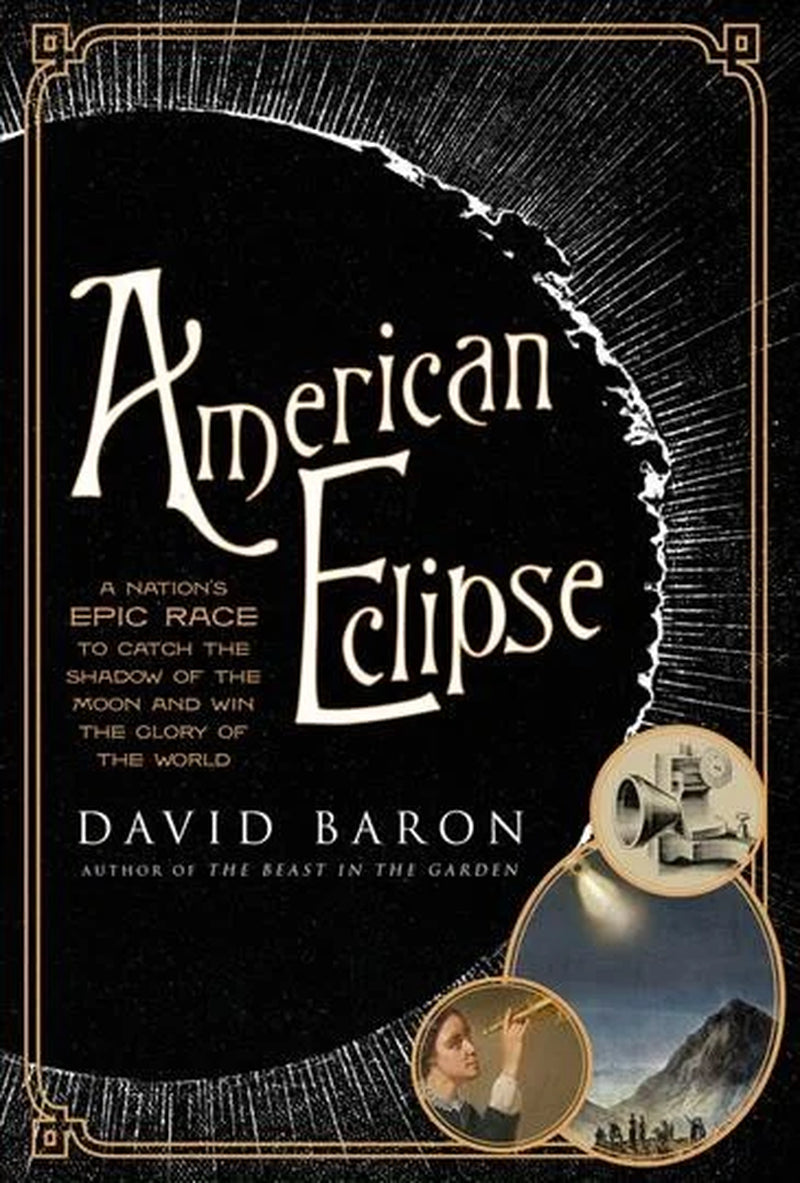
American Eclipse: A Nation's Epic Race to Catch the Shadow of the Moon and Win the Glory of the World
Extended Synopsis
In American Eclipse, acclaimed science journalist David Baron captures a crucial turning point in Western intellectual history: the total solar eclipse of July 29, 1878. As the moon's shadow swept across the American frontier from the Montana Territory to Texas, it acted as a macro-catalyst for a young, industrializing nation. This rare celestial event forced a raw republic to look beyond its rugged borders and mobilize its scientific genius, ultimately proving its structural capacity to compete with the established, elite scientific institutions of Europe. Baron brings this Gilded Age drama to life by detailing the high-stakes logistical parameters of nineteenth-century astronomy.
Rather than approaching the eclipse as a dry celestial catalog entry, the narrative coordinates the historical drama across three fiercely competitive expeditions. James Craig Watson, a brilliant asteroid hunter, risks his reputation hauling massive telescopes to Wyoming Territory to find the hypothesized planet "Vulcan" hidden in the sun's glare. Meanwhile, iconic Vassar astronomer Maria Mitchell aggressively defies an indifferent, male-dominated establishment by leading an all-female expedition to Denver, carving out an undeniable space for women in the global scientific vanguard. Finally, a young Thomas Edison braves the frontier with his newly minted "tasimeter," facing intense mechanical and logistical challenges that would eventually spark his breakthroughs with the incandescent lightbulb. It is a story of ambition, failure, and glory.
Author Biography
David Baron is an acclaimed science journalist, author, and broadcaster with a profound fascination for eclipses and the intersection of science and history. His meticulous archival research and compelling narrative style breathe life into the historical trajectory of American innovation and astronomical discovery.
Reader Targeting
- History enthusiasts focused on the Gilded Age, the American West, and 19th-century scientific expeditions.
- Students and scholars of astronomy and the history of science.
- Readers interested in the early biographies and technological challenges of figures like Thomas Edison and Maria Mitchell.
Accolades
A masterfully constructed historical narrative that refracts nineteenth-century science through the mythologized age of the Wild West. An indispensable reference asset tracking the raw, human infrastructure behind the birth of modern American innovation.
Bibliographic & Physical Specifications
| Publisher | Liveright Publishing Corporation |
|---|---|
| Publication Date | June 6, 2017 |
| Format & Binding | Hardcover (Clothbound with heavy cardstock boards) |
| ISBN-13 / ISBN-10 | 9781631490163 / 1631490168 |
| Page Count | 352 |
| Dimensions & Weight | 9.60 x 6.40 x 1.20 inches | 24.2 oz (686 grams) |
| BISAC Categories | HISTORY / United States / 19th Century SCIENCE / Astronomy HISTORY / Expeditions & Discoveries |
Frequently Asked Questions
Does this book include historical illustrations?
Yes, the volume includes mid-19th-century photographic plates, technical solar maps, and historical portrait engravings from the era.
What made the 1878 eclipse so significant?
It occurred during the dawn of the Gilded Age, prompting an intense race among American scientists to assert the nation's intellectual and technological capabilities against established European institutions.
Bust-Down Books: More Than a Bookstore
Share