Bust-Down Books
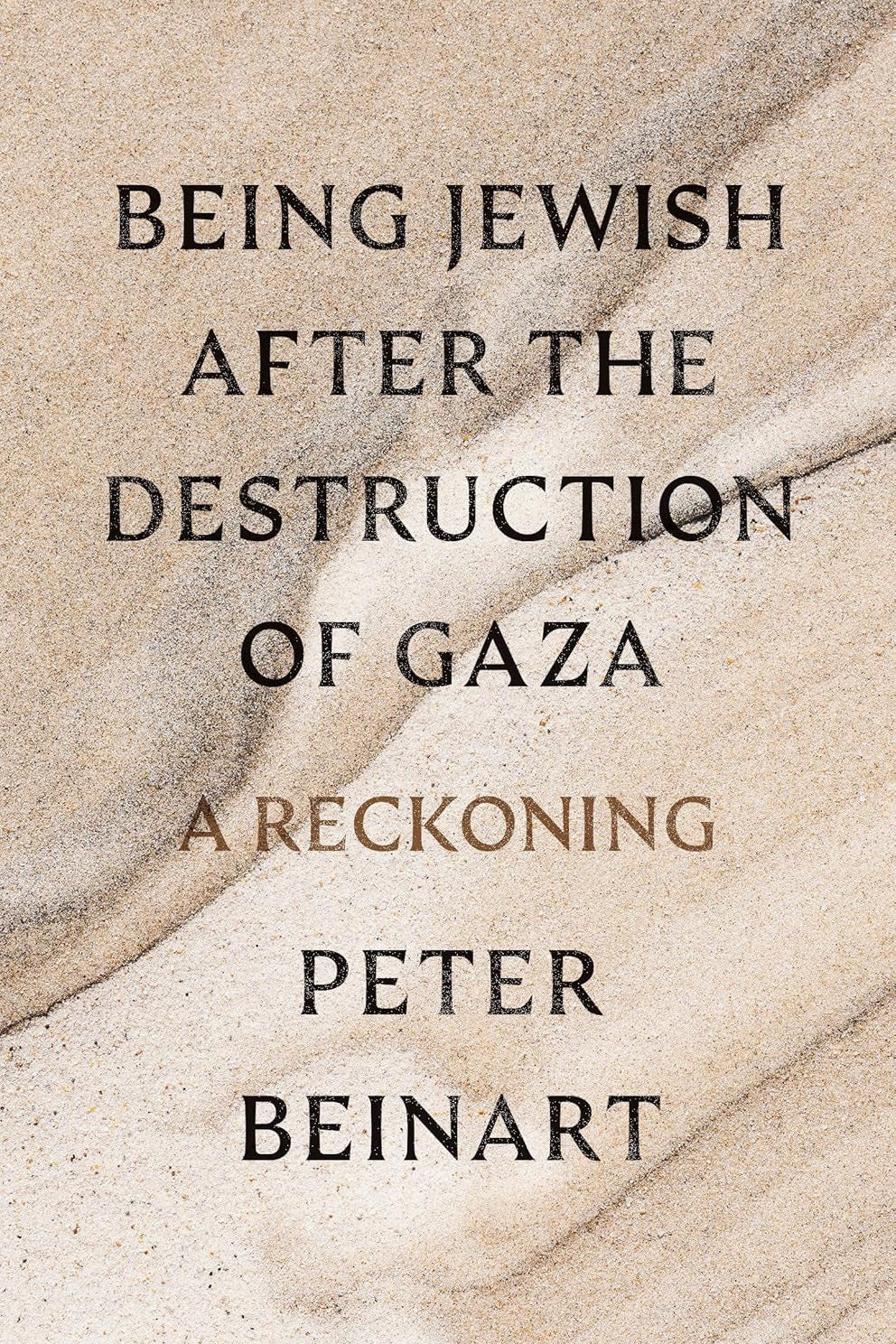
Being Jewish After The Destruction of Gaza | Peter Beinart
Being Jewish After The Destruction of Gaza | Peter Beinart
Couldn't load pickup availability
Being Jewish After the Destruction of Gaza: A Reckoning
Accolades & Praise
- Adam Hochschild (author of American Midnight and King Leopold’s Ghost): “At this painful moment, Peter Beinart’s voice is more vital than ever. His reach is broad—from the tragedy of today’s Middle East to the South Africa he knows well to events centuries ago—his scholarship is deep, and his heart is big. This book is not just about being Jewish in the shadow of today’s war, but about being a person who cares for justice.”
Extended Synopsis
Philosopher, columnist, and political commentator Peter Beinart offers a bold, urgent appeal in Being Jewish After the Destruction of Gaza: A Reckoning. In this provocative work, Beinart challenges the prevailing narrative of Jewish communal life—dominated by stories of persecution and victimhood—by urging a new, nuanced understanding that embraces equality and justice.
In the aftermath of Gaza, where Jewish texts, history, and language have been deployed to justify mass slaughter and starvation, Beinart argues that Jews must tell a new story—one that rejects supremacy in favor of equality, and intertwines the safety and dignity of both Jewish and Palestinian lives. This book is not only a personal reckoning but also a call to action, drawing on the moral reconstruction efforts of other nations and a fresh reading of Jewish tradition.
Accompanied by insightful essays, detailed contextual analysis, and a comprehensive timeline of his career, Being Jewish After the Destruction of Gaza is a powerful narrative that combines personal experience, deep historical knowledge, and a visionary outlook for the future of Jewish identity.
About the Author
Peter Beinart is a prominent political commentator, journalist, and scholar. He is a frequent writer on international relations, Middle Eastern politics, and Jewish communal affairs, bringing deep historical knowledge and moral clarity to his work.
Reader Targeting
- Readers interested in modern Middle Eastern politics, human rights, and international relations.
- Individuals seeking thoughtful, moral perspectives on contemporary Jewish identity and communal reform.
- Scholars, students, and active readers exploring political theology, ethics, and social justice.
Bibliographic & Physical Specifications
| Specification | Details |
|---|---|
| ISBN-13 | 9780593803899 |
| ISBN-10 | 0593803892 |
| Publisher | Knopf |
| Publication Date | January 28, 2025 |
| Edition | First Edition |
| Condition | Pre-Owned / Very Good |
| Format | Hardcover (Hardbound, includes Dust Jacket) |
| Page Count | 192 |
| BISAC Categories | RELIGION / Judaism / General; POLITICAL SCIENCE / International Relations / General |
| Dimensions & Weight | 7.5 x 5.0 x 0.8 inches / 11.2 oz |
Frequently Asked Questions
What is the central thesis of the book?
Beinart argues that the mainstream American Jewish community has organized its collective identity around a narrative of permanent persecution and victimhood. He contends that this narrative operates as a moral blind spot, creating a "false innocence" that enables American Jews to rationalize or ignore the mass violence and civilian suffering of Palestinians in Gaza. Beinart asserts that relying on Jewish texts and history to justify state-sanctioned starvation and destruction is a form of "idolatry" that compromises core Jewish ethical traditions.
How does the book address the October 7th attacks?
A common point of inquiry is whether the book dismisses Jewish trauma. Beinart explicitly states that he does not minimize the horror of the October 7th attacks, openly describing Hamas as a "corrupt and despotic organization" with a history of brutality against both Israelis and Palestinians. However, he chose his specific title because he argues that while October 7th is heavily grappled with in Jewish spaces, the immense human toll of Israel's subsequent military campaign in Gaza has been systematically erased or minimized by major Jewish institutions.
What alternative future or political solution does Beinart propose?
Moving away from his past stance as a liberal Zionist, Beinart argues that Israel does not have an unconditional right to exist specifically as a Jewish state, asserting that state structures are only valuable if they protect all human life equally. He advocates for:
- Rebuilding a Jewish identity centered on equality over supremacy.
- Abandoning the two-state solution in favor of a single democratic state encompassing both Israel and the Palestinian territories.
- Granting equal legal rights to everyone, drawing parallels to the peaceful transitions seen in post-apartheid South Africa and the Good Friday Agreement in Northern Ireland.
Bust-Down Books: More Than a Bookstore
Share