Bust-Down Books
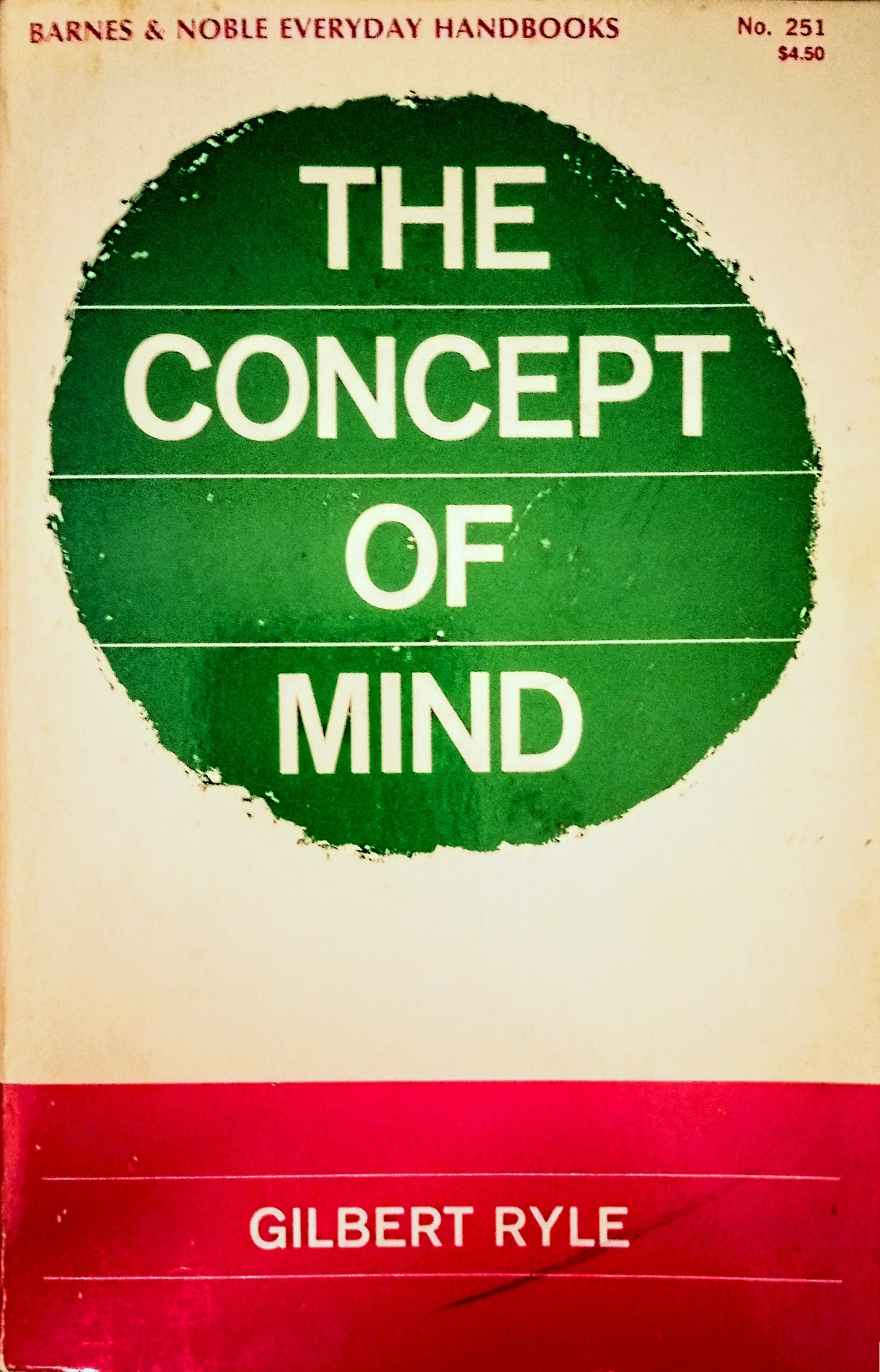
The Concept of Mind by Gilbert Ryle
The Concept of Mind by Gilbert Ryle
Couldn't load pickup availability
The Concept of Mind
Author: Gilbert Ryle
Genre: Philosophy | Cognitive Science | Mind-Body Dualism
The Concept of Mind is a groundbreaking philosophical work that challenges the traditional Cartesian dualism—the belief in a distinct separation between mind and body. First published in 1949, Gilbert Ryle delivers a compelling critique of René Descartes’ notion of the "ghost in the machine," arguing that mental processes are not hidden faculties but intelligent acts intertwined with human behavior.
A Revolutionary Critique of Mind-Body Dualism
Ryle introduces the concept of category mistakes, demonstrating how language misleads us into treating mental and physical activities as fundamentally different substances. He proposes that mental phenomena are not isolated entities but embedded within our practical actions and linguistic frameworks.
Key Themes and Insights
- The Cartesian Myth: Debunking the idea of a mind separate from the body.
- Intelligent Acts: Redefining mental processes as observable behaviors.
- Category Mistake Critique: How misunderstandings in language shape flawed philosophical assumptions.
- Behavior and Disposition: Exploring how mental states manifest through actions rather than inner mechanisms.
Why This Book Matters
The Concept of Mind is a foundational text in philosophy, influencing contemporary discussions in cognitive science, psychology, and artificial intelligence. Ryle’s arguments continue to shape modern perspectives on consciousness, intelligence, and the nature of human thought.
Perfect for:
- Philosophy students and scholars studying metaphysics and epistemology.
- Readers interested in the philosophy of mind and cognitive science.
- Anyone seeking to understand the flaws in traditional mind-body dualism.
Engage with one of the most influential critiques of Cartesian dualism and rethink the way we conceptualize the mind.
Share