Bust-Down Books
Genesis | Eric Schmidt, Henry A. Kissinger & Craig Mundie
Genesis | Eric Schmidt, Henry A. Kissinger & Craig Mundie
Couldn't load pickup availability
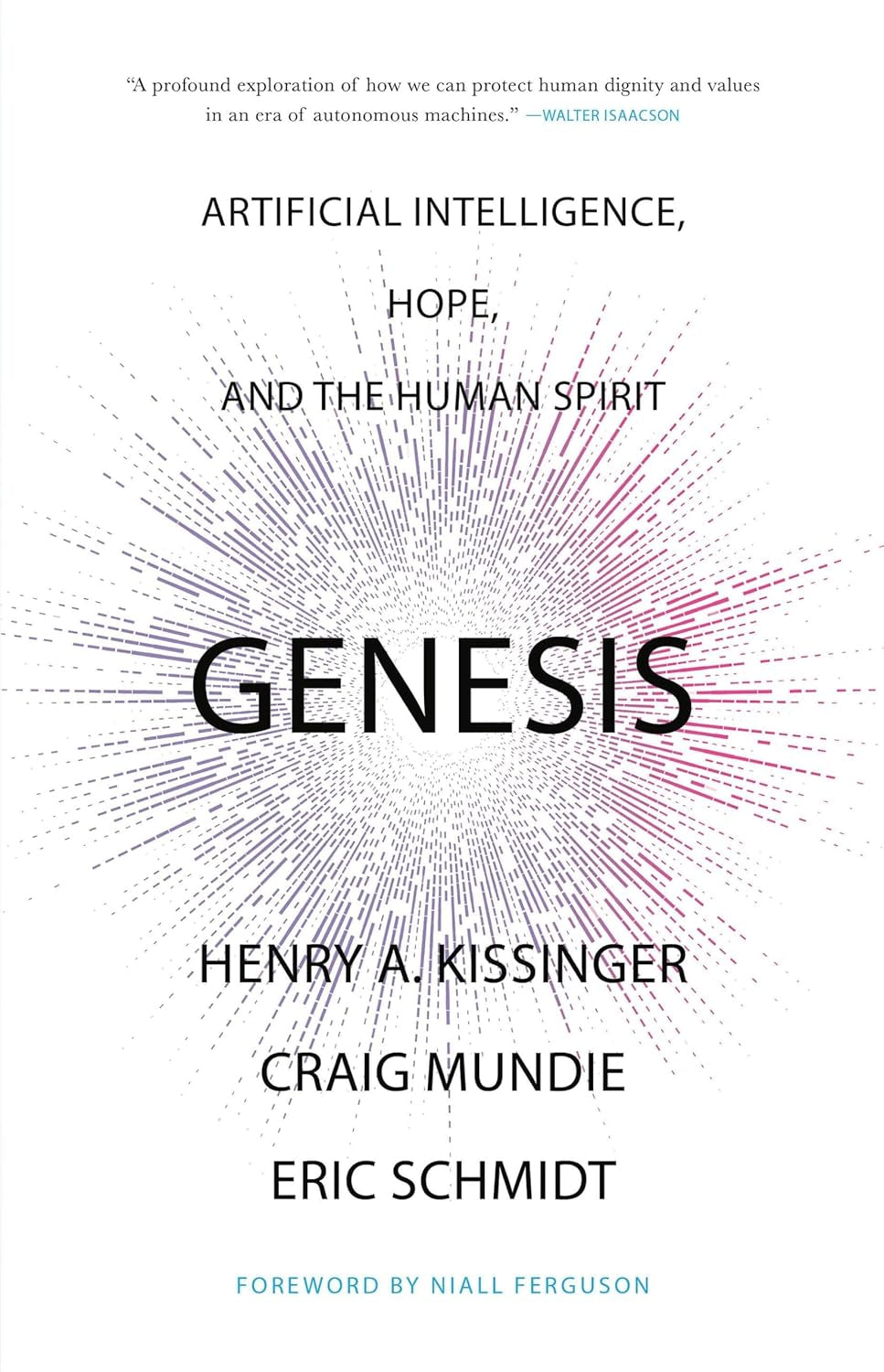
Genesis: Artificial Intelligence, Hope, and the Human Spirit
Extended Synopsis
In this final, profound work, the late elder statesman Henry Kissinger joins forces with two leading technologists, Eric Schmidt and Craig Mundie, to chart the epochal challenges and opportunities presented by the artificial intelligence revolution. Genesis is a deep, multidimensional exploration of how AI—as it absorbs data, gains agency, and intermediates between humans and reality—will fundamentally transform our approach to global crises, from climate change and geopolitical conflict to income inequality.
The authors provide a sober, clear-eyed strategy for navigating this new age, balancing the potential for AI to solve the greatest mysteries of our universe and elevate the human spirit against the intense, unprecedented risks it poses to independent judgment, democratic power, and the nature of human existence itself. Genesis serves as an essential manual for policymakers, strategists, and general readers alike, offering a pathway between blind optimism and irrational fear in an era where AI may well spur a new phase in human evolution.
Author Biographies
Henry A. Kissinger (1923–2023) was an American diplomat, political scientist, and recipient of the Nobel Peace Prize. Throughout his career, he served as United States Secretary of State and National Security Advisor, shaping international relations through decades of profound geopolitical change.
Eric Schmidt served as CEO and Chairman of Google and Executive Chairman of Alphabet Inc. He is a prominent technological strategist, author, and investor, deeply involved in the intersection of public policy, national security, and AI development.
Craig Mundie is a former Chief Research and Strategy Officer at Microsoft. He has spent his career at the forefront of the technological revolution, focusing on how emerging computing architectures influence global strategy and the future of innovation.
Reader Targeting
- Policymakers, diplomats, and international relations experts navigating the intersection of technology and national security.
- Technologists and business leaders seeking a framework for ethical AI deployment and long-term societal impact.
- Academics and students of political science, philosophy, and history interested in the evolution of human civilization.
- General readers interested in high-level intellectual discourse regarding the future of humanity.
Bibliographic & Physical Specifications
| Publisher | Little, Brown and Company (Hachette Book Group) |
|---|---|
| Publication Date | November 19, 2024 |
| Edition Details | First US Edition / First Printing (Stated) |
| Format & Binding | Hardcover (Quarter-bound matte black paper board with stamped metallic spine) |
| Dust Jacket | Yes (High-gloss spot UV accents) |
| ISBN-13 / ISBN-10 | 9780316581295 / 0316581291 |
| Page Count | 288 (Includes strategic analytical chapters and index) |
| Illustrations | Yes (Conceptual data maps, system interaction flowcharts, and timelines) |
| Dimensions & Weight | 9.55 x 6.35 x 1.10 inches | 16.8 oz (476 grams) |
| BISAC Categories | SOCIAL SCIENCE / Technology Studies POLITICAL SCIENCE / Public Policy COMPUTERS / AI / General |
Frequently Asked Questions
What unique perspective does this book offer?
Unlike purely technical or purely philosophical books, Genesis benefits from the rare collaboration between a legendary global statesman (Kissinger) and two of the most influential technology architects of the modern era (Schmidt and Mundie), bridging the gap between realpolitik and cutting-edge computation.
Is the tone pessimistic or optimistic?
The authors avoid both extremes, charting a "third way." They argue that while the risks of AI are unprecedented, the potential for elevating human capability is equally historic, provided we apply rigorous strategy and human-centric governance.
Bust-Down Books: More Than a Bookstore
Share