Bust-Down Books
The Gunfighters by Paul Trachtman
The Gunfighters by Paul Trachtman
Couldn't load pickup availability
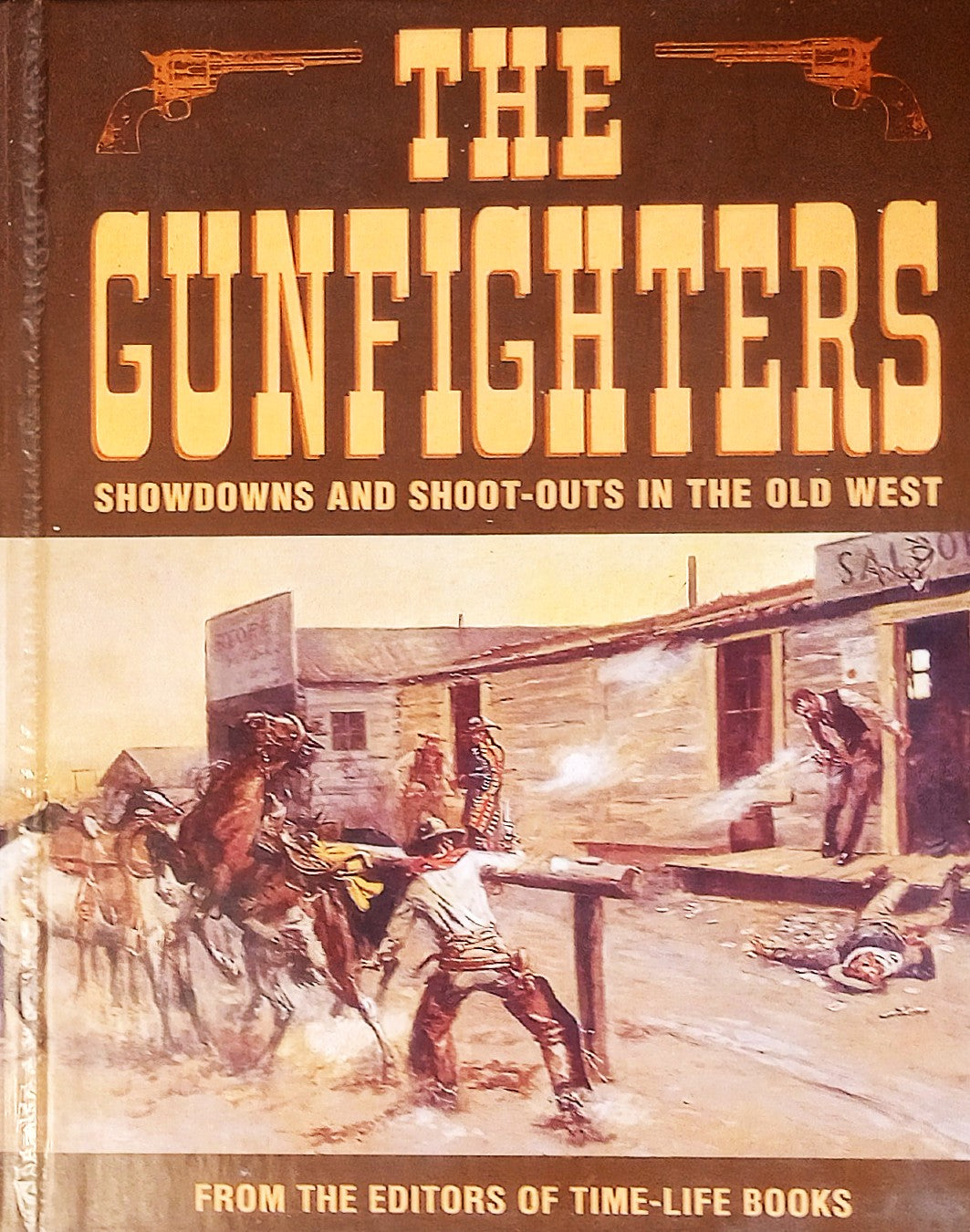
The Gunfighters: Showdowns and Shoot-Outs in the Old West
by Paul Trachtman | From the Editors of Time-Life Books
Tools of the Gunfighters' Trade

"God did not make all men equal." Westerners were fond of saying. "Colonel Colt did."
When it came to the use of shooting irons, however, some men were more equal than others—a fact gunfighters knew well. To improve the odds of landing on the right side of this equation, they exercised meticulous care in selecting their firearms from among the weapons available. As is evident here; they had a wide range of choices.
From service in the Civil War, thousands of frontiersmen inherited guns like the three at right—revolvers whose rotating chambers held several rounds.
They fired a kind of roll-your-own ammunition consisting of a ball, powder and a percussion cap.
But the ammunition was all too fallible: unless carefully loaded, it might misfire or even set off chain-reaction detonations of the rounds in adjoining chambers. The development of metallic cartridges soon solved these problems.

The first metallic-cartridge revolver to be adopted as the standard sidearm of the postwar Army was the mordantly misnamed Colt's Peacemaker of 1873.
Sold in enormous numbers on the open market and by mail, this single-action—i.e., manually cocked hand-pistol swiftly became the weapon most likely to be whipped from the holsters, waistbands or leather-lined coat pockets of Western gunfighters.
But the reliable Peacemaker, along with its imitators and successors, had a drawback.
The relatively short—eight inches or less—reduced power and accuracy. While an expert might consistently hit a stationary sized target at 40 yards, effective revolver range in the chaos of crossfire was less than half that figure.
Most gunfighters therefore enlarged their arsenal with a rifle or a shotgun.
Even with one of these bigger weapons for deadly firepower, and revolver for close work, some gunfighters preferred more than fully equipped, so they added vest-pocket pistol to their array arms.
Although woefully inaccurate, small hidden firearm possessed a marked potential for surprise, and more once proved a trump in the hazard games of men who lived by the tool.