Bust-Down Books
Howl | Allen Ginsberg
Howl | Allen Ginsberg
Couldn't load pickup availability
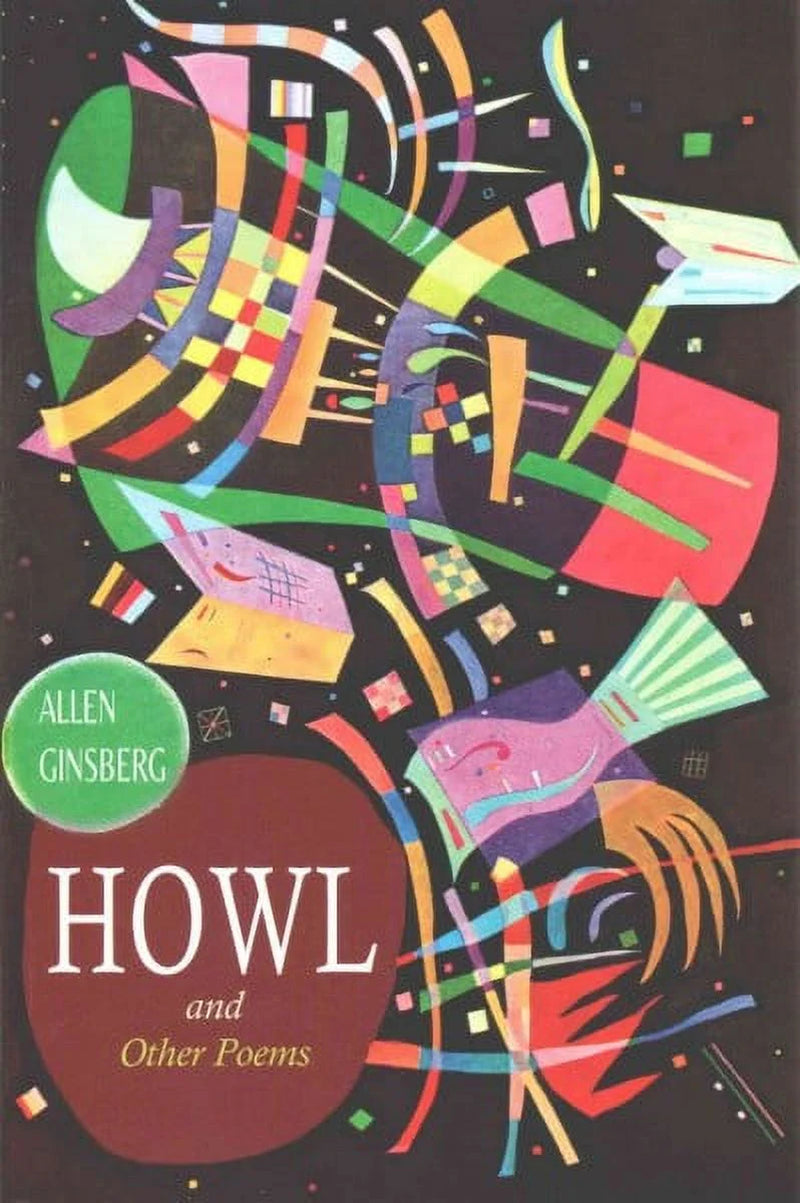
Howl, and Other Poems: Facsimile Edition
Extended Synopsis
In the monumental poetic masterpiece Howl, and Other Poems, foundational Beat Generation visionary Allen Ginsberg analyzes the structural parameters of mid-century counterculture prosody, the tactical implementation of long-line jazz metrics, and the systemic deconstruction of institutionalized mid-century American conformity. Reissued in this sharp 46-page facsimile paperback configuration by Martino Publishing, this slim anthology serves as the definitive lightning rod of 20th-century avant-garde literature. Ginsberg establishes an unyielding aesthetic and cultural thesis: the hyper-industrialized, militarized, and emotionally repressed framework of post-WWII American society acts as a psychological slaughterhouse, systematically destroying the country’s most creative, sensitive, and non-conforming minds—a trauma that can only be vindicated through raw, uninhibited, and prophetic verse.
Rather than arranging the collection as a series of polite academic stanzas, the author orchestrates his legendary poetic rebellion across three prominent thematic and stylistic movements. The paradigm of the best minds and Moloch establishes the primary systemic diagnostic baseline. The volume opens with Part I of the legendary title poem “Howl,” launching a long-breathed, cascading single-sentence catalog of the marginalized, the addicted, the visionary, and the broken outcasts of the post-war landscape. Ginsberg transforms these street-level experiences into a sacred martyrdom. In Part II, the text shifts focus to name the mechanical engine behind this widespread psychological destruction: “Moloch,” an ancient Canaanite deity re-imagined here as the chilling symbol of modern industrial capitalism, blind militarism, mental institutionalization, and the soul-crushing urban landscape that demands absolute human sacrifice for systemic efficiency.
The architecture of solidarity across Carl Solomon and Rockland sets the tactical emotional framework. The emotional center of gravity locks into Part III, structured as a rhythmic call-and-response chant dedicated to Carl Solomon, a fellow writer Ginsberg met while hospitalized in the Columbia Psychiatric Institute. Through the structural refrain “I’m with you in Rockland,” the poem bridges the isolation of state-enforced sanity, turning a bleak psychiatric ward into an active crucible of political and spiritual resistance. This module frames emotional vulnerability and mental breakdown not as personal failures, but as the only logical response to a fundamentally insane social order. The volume achieves its ultimate peak through the sovereign resolution of the footnote to Howl and the sacred everyday. Through ecstatic declarations and supplementary works like “A Supermarket in California,” Ginsberg completely subverts his initial bleak vision by shouting an absolute, repetitive mantra of universal holiness, providing a radical blueprint for reclaiming individual sovereignty from corporate conformity.
Historical & Legal Significance
Upon the collection's initial release, publisher Lawrence Ferlinghetti and City Lights bookstore manager Shigeyoshi Murao were arrested and charged with disseminating obscene literature. On October 3, 1957, in a landmark decision for American civil liberties and artistic expression, Judge Clayton W. Horn ruled that the poem possessed redeeming social importance and was not obscene. Notably, literary history clarifies that there is no foundation to the popular myth that “Howl” was originally written strictly as a performance piece and later published by Ferlinghetti; this narrative was intentionally perpetuated by the defense during the trial to underscore the poem's oral traditions and literary validity within the courtroom setting.
Author & Contributor Biography
Allen Ginsberg (1926–1997) was an American poet, philosopher, and leading figure of the Beat Generation. His raw, visionary, and uninhibited writing challenged the boundaries of censorship, transformed American prosody, and provided a voice for the mid-century counterculture movement. This edition features a historical introductory appreciation manifesto by legendary modernist poet William Carlos Williams (1883–1963), whose early guidance and literary support helped launch Ginsberg into the international vanguard of American literature.
Reader Targeting
- Scholars, students, and institutional libraries tracking 20th-century American literature, avant-garde poetry, and the historical legacy of the Beat Generation.
- Analytical readers investigating modern prosody, performance poetics, jazz metrics, and constitutional battles over literary censorship.
- Collectors and archives seeking an authentic, highly portable facsimile reprint of the iconic mid-century pocket design layout.
Bibliographic & Physical Specifications
| Publisher & Imprint | Martino Publishing (Martino Fine Books) |
|---|---|
| Publication Date | June 4, 2015 |
| Format & Binding | Softcover / Pocket Bound Variant (Facsimile Reprint Edition / First Printing Thus; standard trade perfect binding with a highly flexible softcover cardstock casing and a smooth matte protective finish) |
| ISBN-13 / ISBN-10 | 9781614278191 / 1614278199 |
| Page Count | 46 pages (Includes complete multi-part titular epic poem, supplementary beat anthology works, and the historical introductory appreciation manifesto) |
| Dimensions & Weight | 9.00 x 6.00 x 0.11 inches | 2.9 oz (0.18 lbs / 82 grams) |
| BISAC Categories | POETRY / American / General POETRY / Individual Poets / American |
Frequently Asked Questions
What specific secondary poems are compiled alongside the primary title track in this collection?
In addition to “Howl” and its definitive “Footnote,” this slim volume features foundational mid-century selections including “A Supermarket in California,” “Transcription of Organ Music,” “Sunflower Sutra,” “America,” and “In the Baggage Room at Greyhound,” alongside earlier works such as “An Asphodel,” “Song,” “Wild Orphan,” and “In Back of the Real.”
Is the myth true that Ginsberg wrote “Howl” solely as an oral performance piece?
No. There is no historical foundation to the myth that the poem was drafted merely as a performance layout before being discovered by Lawrence Ferlinghetti. This narrative framework was strategically emphasized by City Lights Books during the 1957 obscenity trial to demonstrate the text's academic validity and oral value to the presiding judge.
Bust-Down Books: Armed With Education
Share