Bust-Down Books
Lost Horizon | James Hilton
Lost Horizon | James Hilton
Couldn't load pickup availability
Lost Horizon: A Novel | James Hilton
What happens when modern travelers stumble upon a hidden mountain utopia where time itself stands still? James Hilton investigates in Lost Horizon.
About the Book:
Originally published in 1933, Lost Horizon gained unrivaled popularity from coast to coast, particularly after Frank Capra's spellbinding 1937 film introduced audiences nationwide to its stunning tale of revolution, utopia, emotion, and adventure set in a hidden mountaintop escape known only as Shangri-La.
“The most artful kind of suspense... ingenuity I have rarely seen equaled.”
—The New Yorker
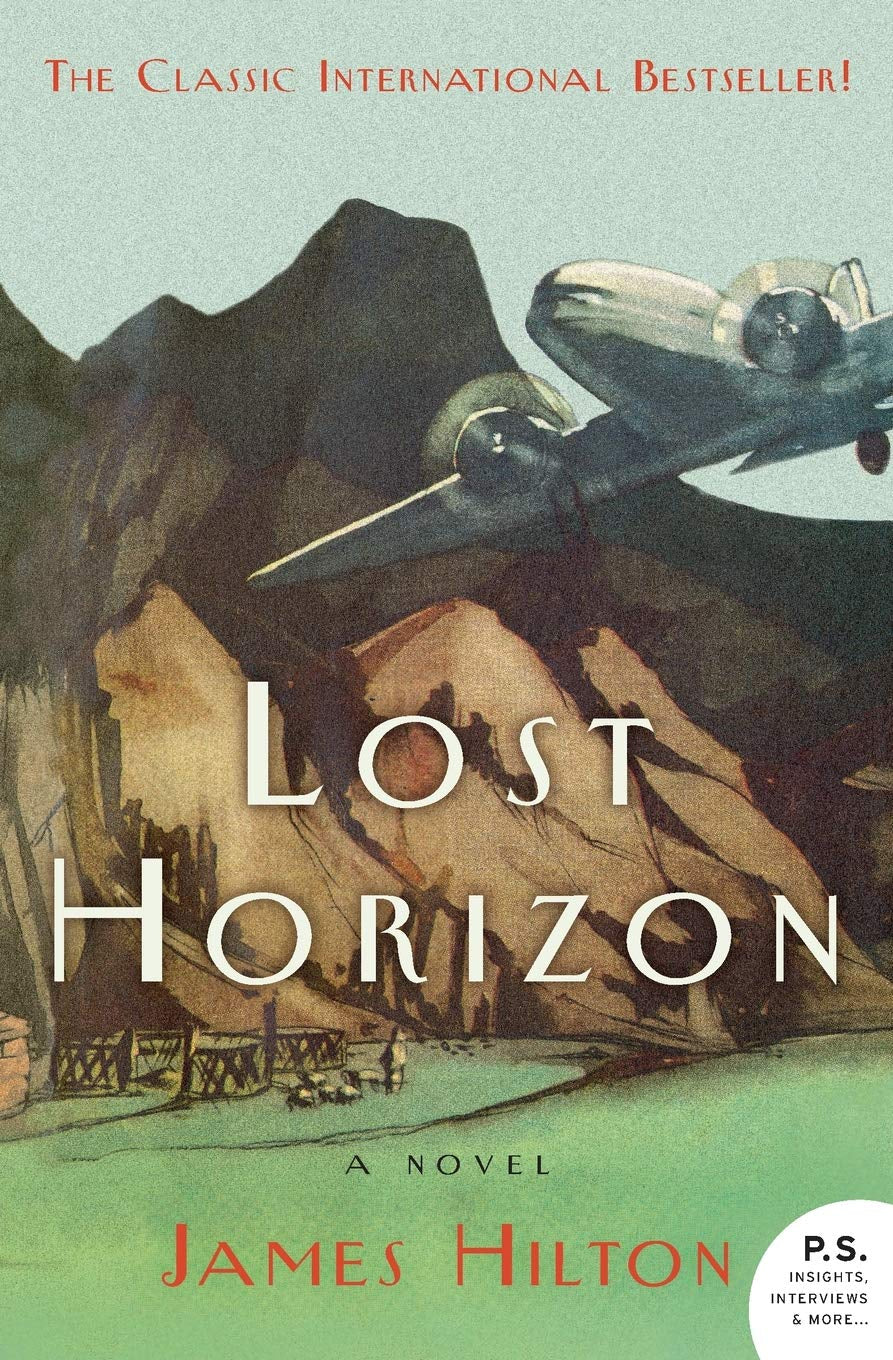
When an uprising in Baskul forces a small group of English and American residents to flee, their plane crash-lands in the far western reaches of the Tibetan Himalayas.
There, the bewildered party finds themselves stranded outside the protective borders of the British Empire, and discovers access to a place beyond the bounds of the imagination—a legendary paradise, the mystic monastery Shangri-La.
Frequently Asked Questions About Lost Horizon:
-
Q: Is this the book that originally created or introduced the concept of Shangri-La?
A: Yes. This legendary 1933 novel is the exact origin of the name and concept of "Shangri-La." James Hilton coined the term to describe his fictional, utopian valley hidden deep in the Himalayas, completely transforming the phrase globally into a universal synonym for a peaceful, paradise-like refuge from the modern world. -
Q: What is the primary plot and the event that triggers the story?
A: The narrative ignites during a chaotic military evacuation in Baskul, British India. A small airplane carrying four Western passengers—led by a brilliant British diplomat named Hugh Conway—is mysteriously hijacked and flown deep into the uncharted mountain peaks of Tibet, crashing near an isolated, miraculous lamasery. -
Q: How does this specific Harper Perennial Olive edition differ from older printings?
A: This modern edition is part of HarperCollins' premium "Olive Edition" series. It features a beautifully designed, minimalist retro cover, enhanced typography for modern readability, and a unique, olive-themed structural design profile, making it a highly collectible copy for book shelves. -
Q: What major themes and cultural context make this classic book relevant today?
A: Written in the shadow of World War I and the Great Depression, the book acts as a powerful critique of Western industrialization and impending global conflict. It explores timeless themes of pacifism, emotional moderation, the preservation of human culture, the pursuit of longevity, and finding mental peace away from hyper-materialistic societies. -
Q: Is the book a fast-paced survival thriller or a philosophical exploration?
A: It balances both but leans heavily into atmospheric and philosophical exploration. While the opening escape and journey are highly suspenseful, once the characters arrive at the monastery, the story transforms into a beautiful, thought-provoking mystery driven by deep conversations regarding time, destiny, and the human spirit.
About the Author:
James Hilton: British Novelist & Screenwriter
James Hilton was born in Leigh, Lancashire, England on September 9, 1900. While attending the Leys School in Cambridge, he published several stories in the school magazine.
In 1918, he won a scholarship to Christ's College, Cambridge, where he joined the University Officer Training Squadron. Before he saw any action, the war ended. He published his first novel, Catherine Herself, in 1920, while still an undergraduate. After Cambridge, he became a freelance journalist, writing chiefly for The Manchester Guardian and later The Irish Independent and reviewing fiction for The Daily Telegraph.
During this time, he had several more of his novels published, though without conspicuous success. In 1931, he enjoyed his first popular success with And Now Goodbye and was able to take up writing fiction full time. His other works include Lost Horizon, which won the Hawthornden Prize, Goodbye Mr. Chips, and Random Harvest, all of which were made into highly successful motion pictures.
In 1935, he was invited to Hollywood to work as a screenwriter. He wrote screenplays for Camille, Foreign Correspondent, Forever and a Day, The Story of Dr. Wassell, The Tuttles of Tahiti, and We Are Not Alone. He won the Best Screenplay Oscar for Mrs. Miniver in 1942.
During his Hollywood years, he continued to write novels including Nothing So Strange, Morning Journey, and Time and Time Again. He also served as the narrator for Madame Curie and the adaptation of his novel So Well Remembered, in addition to hosting CBS Radio's Hallmark Playhouse from 1948 until 1953.
He died of liver cancer on December 20, 1954.
Bibliographic Data:
- Full Title: Lost Horizon: A Novel
- Author(s): James Hilton
- Publisher & Imprint: Harper Perennial (An imprint of HarperCollins Publishers)
- Publication Date: June 12, 2012 (Original text published in 1933)
- Binding Format: Trade Paperback
- Condition: Pre-Owned / Very Good
- Edition: Reprint / Harper Perennial Olive Edition
- Print Length: 272 Pages
- Language: English
- ISBN-13: 9780062113726
- ISBN-10: 0062113721
- Library of Congress (LCCN): 33-030116
- Primary Genre (BISAC): FICTION / Classics
- Sub-Genres (BISAC): FICTION / Action & Adventure; FICTION / Visionary & Metaphysical; FICTION / Literary
- Dimensions: 5.31 x 0.61 x 8.0 inches
- Weight: 7.5 oz (approx. 0.47 lbs)
Secure Your Copy!
Explore the legendary tale of a hidden Himalayan paradise, Shangri-La, and a timeless mystery. Tap to discover James Hilton's classic novel Last Horizon today!
Share