Bust-Down Books
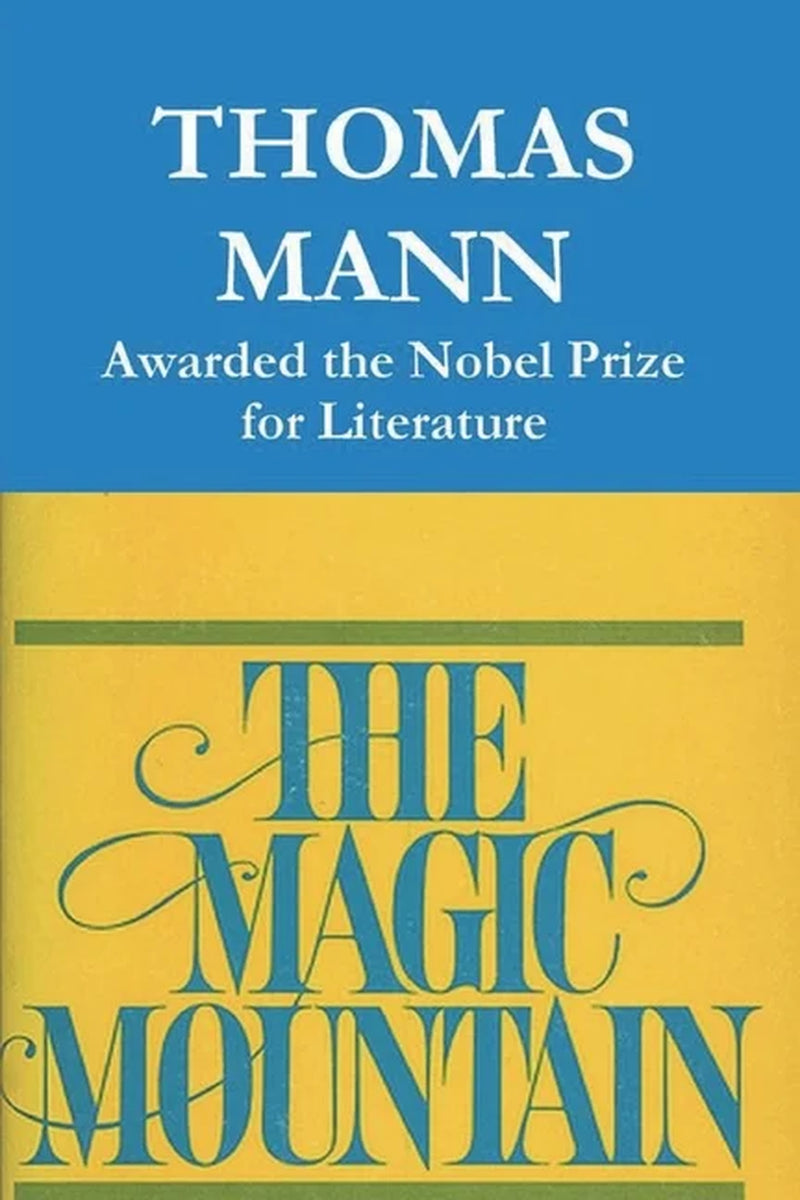
The Magic Mountain | Thomas Mann
The Magic Mountain | Thomas Mann
Couldn't load pickup availability
How does a seven-year stay at an alpine sanatorium mirror the spiritual crisis of a continent? Thomas Mann investigates in The Magic Mountain.
About the Book:
With this dizzyingly rich novel of ideas, Thomas Mann rose to the front ranks of the great modern novelists, winning the Nobel Prize for Literature in 1929.
The Magic Mountain takes place in an exclusive tuberculosis sanatorium in the Swiss Alps.
A community devoted to sickness that serves as a fictional microcosm for Europe in the days before the First World War.
To this hermetic and otherworldly realm comes Hans Castorp, an "ordinary young man" who arrives for a short visit and ends up staying for seven years, during which he succumbs both to the lure of eros and to the intoxication of ideas.
Frequently Asked Questions About The Magic Mountain:
-
Q: Who is the translator responsible for the text in this specific paperback edition?
A: This edition features the historic, classic translation by Helen Tracy Lowe-Porter. It is highly celebrated for being the original English translation that first introduced Thomas Mann’s intricate German prose, dry irony, and complex intellectual debates to the English-speaking world. -
Q: Is this book a fast-paced survival thriller set in the mountains?
A: No. The Magic Mountain is a monumental, introspective philosophical novel and a classic Bildungsroman (coming-of-age story). While it has moments of deep emotional and romantic tension, the plot moves at a deliberate, atmospheric pace, focusing heavily on long intellectual debates, reflections on time, and psychological shifts. -
Q: What is the primary setting and structural hook of the narrative?
A: The entire story is set within an exclusive, high-altitude tuberculosis sanatorium hidden away in the Swiss Alps. The protagonist, an ordinary young engineer named Hans Castorp, arrives intending to stay for a brief three-week visit to his ailing cousin but ends up becoming enchanted by the environment, remaining isolated there for seven years. -
Q: How does the book function as a historical microcosm or commentary?
A: The isolated mountaintop sanatorium acts as a brilliant, self-contained microcosm of pre-World War I European society. Through a fascinating cast of characters—including radical anarchists, fierce humanists, rigid rationalists, and eccentric royalty—Mann uses the patients' endless debates to mirror the ideological clashing and spiritual decay of a Europe blindly marching toward a massive global conflict. -
Q: Did this specific novel earn Thomas Mann the Nobel Prize in Literature?
A: Yes, in part. While the Nobel Committee formally cited his earlier family saga Buddenbrooks when awarding him the Nobel Prize in Literature in 1929, the massive international commercial and critical success of The Magic Mountain (published in 1924) solidified his status in the front ranks of the world's greatest modern novelists. -
Q: Who is the main character and what drives his journey?
A: The story follows Hans Castorp, an ordinary, uninspired young German engineer. He arrives at the mountain retreat for what is supposed to be a simple, three-week vacation to visit his ailing cousin, but he becomes captivated by the atmosphere and ends up staying for seven years. -
Q: What major philosophical themes and topics are debated by the characters?
A: The book functions as a rich intellectual battleground. Through a fascinating cast of patients—including anarchists, humanists, and mystics—the text explores profound human concerns regarding the elastic nature of time, the allure of illness and physical decay, human mortality, political ideologies, and the power of love.
About the Author:
Thomas Mann: German Novelist & Short Story Writer
Thomas Mann (1875–1955) was from Germany. At the age of 25, he published his first novel, Buddenbrooks. In 1924, The Magic Mountain was published, and five years later, Mann was awarded the Nobel Prize for Literature.
Following the rise of the Nazis to power, he left Germany for good in 1933 to live in Switzerland and then in California, where he wrote Doctor Faustus (first published in the United States in 1948).
Bibliographic Data:
- Full Title: The Magic Mountain (German: Der Zauberberg)
- Author(s): Thomas Mann
- Translator: H. T. Lowe-Porter
- Publisher & Imprint: Must Have Books / Important Books
- Publication Date: March 20, 2023
- Binding Format: Trade Paperback
- Condition: Pre-Owned / Very Good
- Edition: Reprint
- Print Length: 482 Pages
- Language: English
- ISBN-13: 9781774640449
- ISBN-10: 1774640449
- Library of Congress (LCCN): 25004224
- Primary Genre (BISAC): FICTION / Classics
- Sub-Genres (BISAC): FICTION / Literary; FICTION / Psychological; FICTION / Sagas
- Dimensions: 6.0 x 1.07 x 9.0 inches (22.86 x 15.24 x 2.72 cm)
- Weight: 1.54 lbs (approx. 0.7 kg)
Grab Your Copy!
Explore the monumental Nobel Prize-winning masterpiece of philosophy, time, and human illness. Tap to discover Thomas Mann's The Magic Mountain today!
Share