Bust-Down Books
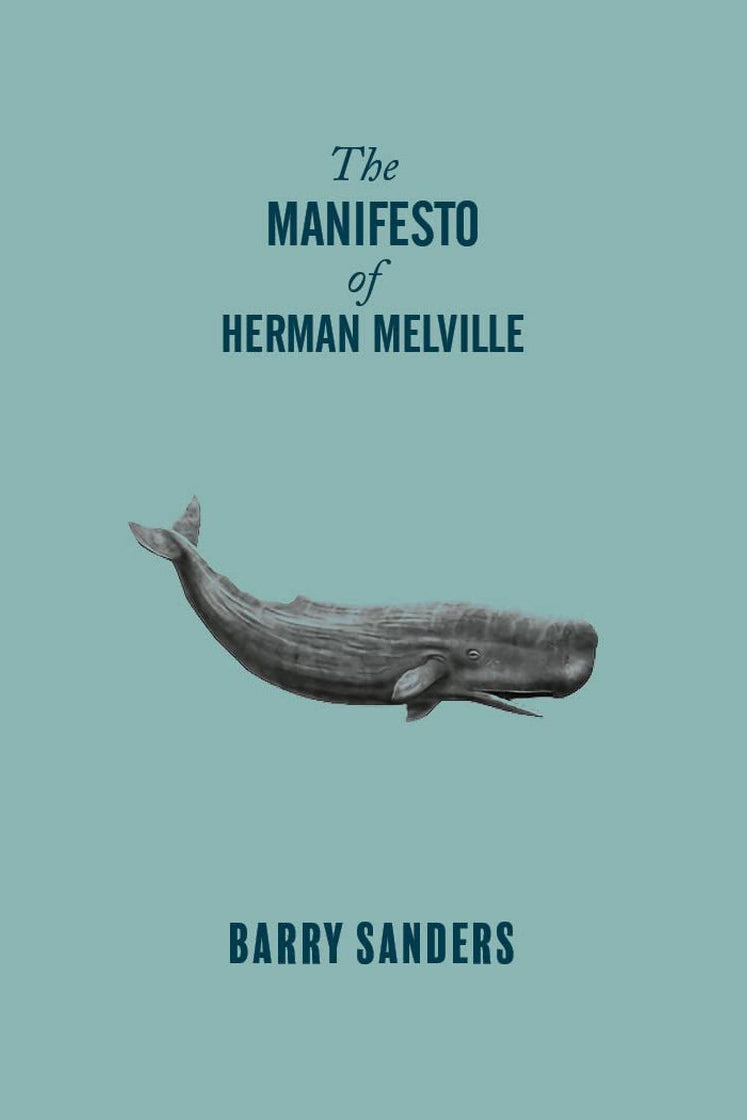
The Manifesto of Herman Melville | Barry Sanders
The Manifesto of Herman Melville | Barry Sanders
Couldn't load pickup availability
The Manifesto of Herman Melville
Accolades & Praise
- Iconoclastic Critique: Praised as a contentious and persuasive re-casting of an American classic by a renowned critic.
- Provocative Analysis: Celebrated for stripping away conventional interpretations to reveal a profound prophetic warning regarding the natural world.
Extended Synopsis
In this iconoclastic and sure to be contentious re-casting by a renowned critic, the great American novel Moby Dick is presented as a work that has been widely misread, an error that continues to this day. According to Barry Sanders, Herman Melville’s best-known work is not a novel, does not pretend to be a novel, and was not intended by its author to be read as a novel. Instead, it is this country’s first manifesto, a tocsin sounded to warn us about the encroaching end of nature.
The Manifesto of Herman Melville traces the evolution of Moby Dick—from its awful, initial reception, very rapidly passing out of print, to its remarkable revival to become lauded as one of America’s great literary classics. That turnaround happened in the early decades of the 20th century and was, in great part, the result of the new and radical aesthetic movements such as surrealism, dadaism, and cubism that allowed for a radical reading of the book. The novel’s new standing as one of the keystones of the American canon disguises its deeper meaning as an alarm bell. Sanders argues that Melville's work is a bold statement warning of the destruction of the natural world, made most evident in the book’s central metaphor: the relentless pursuit to kill the whale for its energy-producing oil, mirroring modern society's willingness to kill off nature for fuel.
About the Author
Barry Sanders is a renowned literary and cultural critic recognized for his provocative and persuasive assessments of classic literature and modern society. His work frequently challenges established academic interpretations, offering fresh, philosophical lenses through which to examine historical texts and their ongoing relevance to contemporary social and environmental issues.
Reader Targeting
- Students and scholars of American literary criticism seeking non-traditional analyses of Herman Melville's works.
- Readers interested in environmental philosophy, social critiques, and the historical context of the energy industry.
- Individuals exploring the intersections of classic literature, modern capitalism, and ecological preservation.
Bibliographic & Physical Specifications
| Specification | Details |
|---|---|
| ISBN-13 | 9781682193990 |
| ISBN-10 | 1682193993 |
| Publisher | OR Books |
| Publication Date | April 15, 2014 |
| Condition | Pre-Owned / Very Good |
| Format | Paperback (Softcover, Issued without dust jacket) |
| Page Count | 140 |
| BISAC Categories | LITERARY CRITICISM / American / General; PHILOSOPHY / Social |
| Dimensions & Weight | 8.5 x 5.5 x 0.4 inches / 6.2 oz |
Frequently Asked Questions
Is this book a standard literary analysis of Moby Dick?
No, this book presents an iconoclastic re-casting of the text. Barry Sanders argues that Moby Dick was never intended to be read as a novel, but rather as America's first environmental manifesto.
What is the main argument Barry Sanders makes?
Sanders asserts that Herman Melville was issuing a prophetic warning about the relentless destruction of the natural world driven by the pursuit of energy. He draws parallels between the historical whaling industry depicted in the book and modern society's continued exploitation of nature for fuel and profit.
Why does the book claim Moby Dick experienced a revival in the 20th century?
According to Sanders, the book rapidly fell out of print initially, but was revitalized in the early 20th century due to the rise of radical aesthetic movements like surrealism, dadaism, and cubism. These movements allowed audiences to finally appreciate and process the radical, non-traditional structure of Melville's work.
Bust-Down Books: More Than a Bookstore
Share