Bust-Down Books
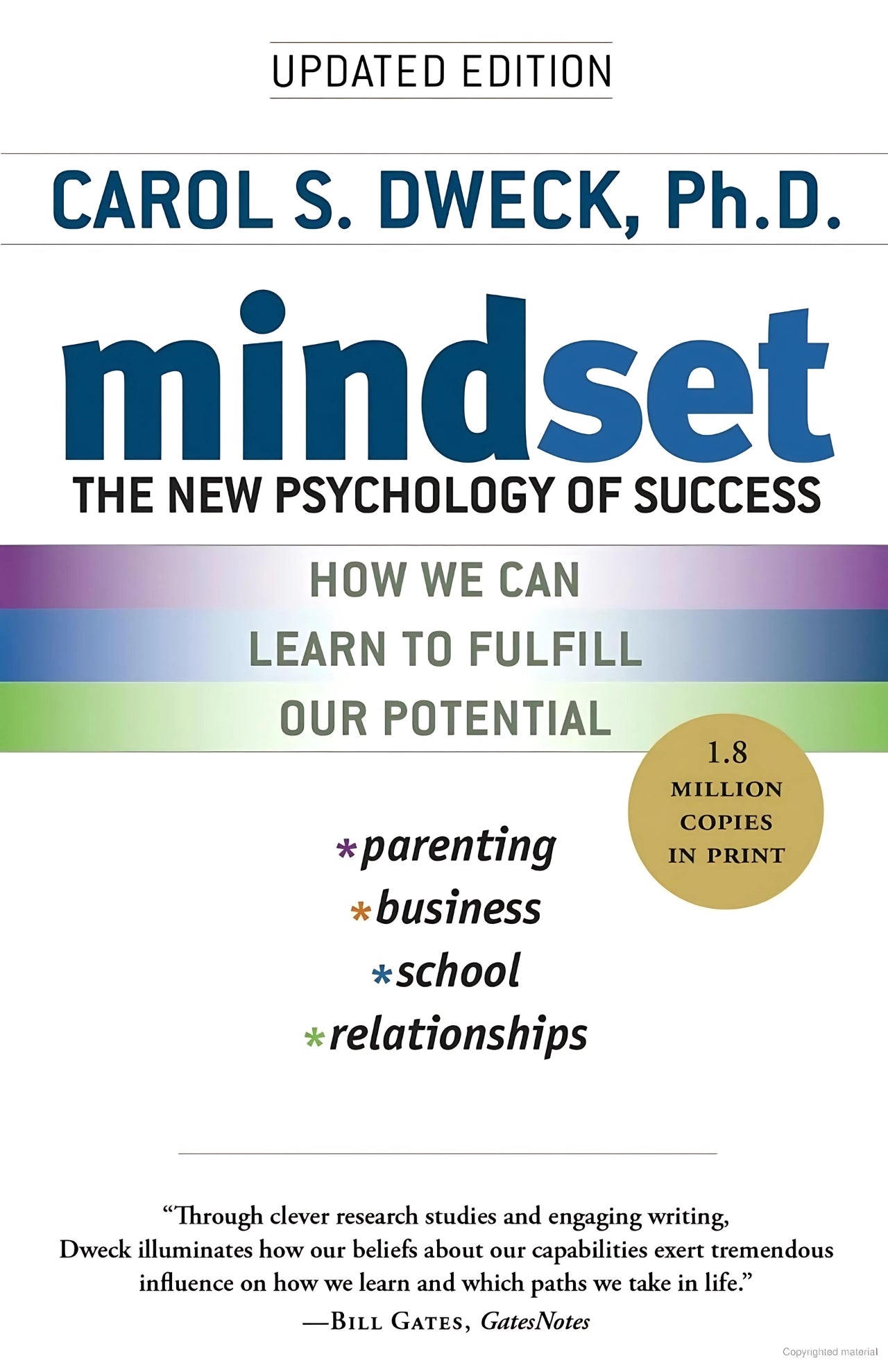
Mindset | Carol S. Dweck
Mindset | Carol S. Dweck
Couldn't load pickup availability
Mindset: The New Psychology of Success
Extended Synopsis
In Mindset: The New Psychology of Success, world-renowned Stanford University psychologist Carol S. Dweck, Ph.D., outlines a transformative behavioral paradigm grounded in more than twenty years of rigorous empirical research. Spanning 320 pages, this cornerstone text introduces the binary architecture of the human cognitive outlook, contrasting the “fixed” mindset against the “growth” mindset. Dweck explores how a person's foundational beliefs regarding human intelligence, talent, and adaptability ultimately dictate their trajectory across education, corporate leadership, professional sports, and interpersonal relationships.
The book organizes its clinical observations and actionable strategies across three central vectors:
- The Binary Framework of Cognitive Architecture: Dweck defines the Fixed Mindset as the implicit belief that cognitive capacity, creative aptitude, and moral character are static, unalterable traits determined at birth. This orientation creates a persistent psychological urgency to continuously validate basic abilities, transforming everyday challenges into high-stakes trials where failure signals a terminal deficit of self-worth. Conversely, the Growth Mindset treats basic human qualities as elastic, malleable capabilities that can be expanded, sharpened, and evolved through deliberate application, strategic practice, and continuous instruction.
- The Redefinition of Effort and Failure Dynamics: The narrative details how each cognitive framework processes effort, errors, and constructive feedback. For fixed-mindset individuals, the necessity of intense exertion functions as definitive proof of a lack of natural genetic talent. For growth-mindset individuals, effort is embraced as the primary mechanism of neuroplasticity and mastery. Under the growth model, failure shifts from an identity-shattering verdict into an essential informational metric—providing the objective, diagnostic feedback required to iterate, pivot, and optimize performance.
- Institutional Application and False Growth Alignment: Expanding her models to group mechanics, Dweck examines how structural praise frameworks shape long-term resilience in children and how corporate environments focused strictly on talent monopolies stifle collaborative innovation. This updated edition introduces the critical warning of the “False Growth Mindset”—a structural pitfall where individuals or organizations verbally praise growth concepts but fail to support them with authentic self-reflection, baseline strategies, or systemic structural support.
Accolades & Praise
“Through clever research studies and engaging writing, Dweck illuminates how our beliefs about our capabilities exert tremendous influence on how we learn and which paths we take in life.”
— Bill Gates, GatesNotes
Author Biography
Carol S. Dweck, Ph.D., is one of the world’s leading researchers in the fields of personality, social psychology, and developmental psychology. She is the Lewis and Virginia Eaton Professor of Psychology at Stanford University, a member of the American Academy of Arts and Sciences, and the recipient of numerous distinguished scientific contribution awards. Her groundbreaking conceptual frameworks have been adopted widely by international corporate boards, elite athletic organizations, and national educational ministries to foster systemic resilience and sustainable performance optimization.
Reader Targeting
- Corporate executives, team leaders, and human resource directors aiming to dismantle talent-hoarding bottlenecks and construct highly cooperative, risk-tolerant organizational cultures.
- Educators, academic administrators, and parents looking for research-backed verbal praise models that promote intrinsic motivation and intellectual perseverance.
- Professionals, athletes, and individuals seeking a structured cognitive behavioral blueprint to overcome perfectionism, reframe personal setbacks, and implement sustainable growth strategies.
Bibliographic & Physical Specifications
| Specification | Bibliographic & Physical Details |
|---|---|
| ISBN-13 / ISBN-10 | 9780345472328 / 0345472322 |
| Publisher / Imprint | Ballantine Books / Random House Publishing Group (Penguin Random House) |
| Publication Date | December 26, 2007 (Original Hardcover Release: 2006) |
| Edition / Format | First Ballantine Books Trade Paperback Edition |
| Binding & Materials | Flexible softcover cardstock cover, smooth protective matte laminate finish, commercial trade perfect binding, printed on high-opacity acid-free cream text paper stock |
| Page Count & Illustrations | 320 pages / No illustrations |
| Dimensions (Imperial & Metric) | 8.00 x 5.20 x 0.70 inches (203 x 132 x 18 mm) |
| Weight | 8.4 oz (0.53 lbs / 238 grams) |
Frequently Asked Questions
What precisely distinguishes a fixed mindset from a growth mindset regarding talent?
A fixed mindset treats talent as an inherent, static asset that cannot be substantially modified, leading individuals to avoid challenges that might reveal vulnerabilities. A growth mindset views baseline talent as merely a developmental starting point, asserting that sustained effort, innovative strategy, and mentorship can continuously expand cognitive and technical abilities.
What does Carol Dweck mean by the term “False Growth Mindset”?
A false growth mindset occurs when an individual or an organization superficially adopts the vocabulary of continuous learning and effort but fails to implement structural changes. It frequently manifests as praising empty effort without encouraging technical strategy shift, or claiming open-mindedness while remaining deeply defensive in the face of critical feedback or operational failure.
Bust-Down Books: More Than a Bookstore
Share