Bust-Down Books
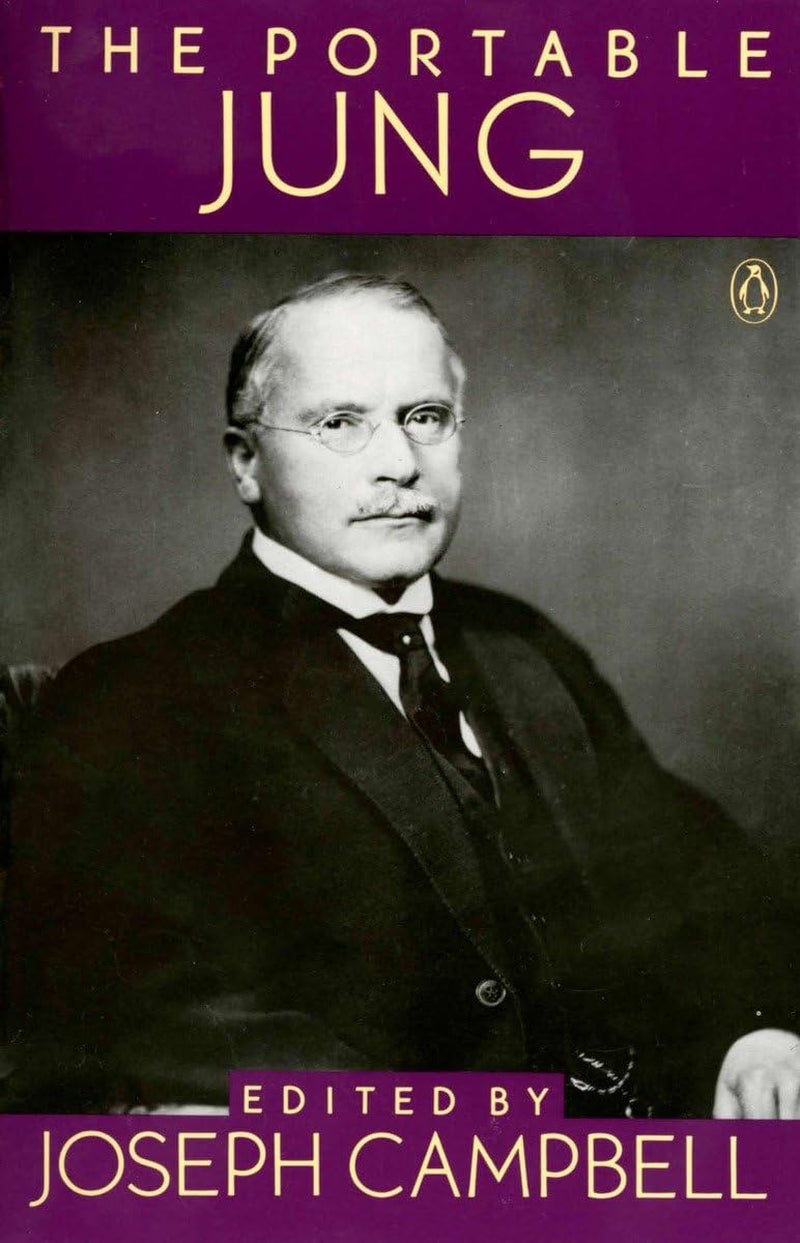
The Portable Jung | C.G. Jung
The Portable Jung | C.G. Jung
Couldn't load pickup availability
This comprehensive collection of writings by the epoch-shaping Swiss psychoanalyst was edited by Joseph Campbell, himself the most famous of Jung's American followers. It comprises Jung's pioneering studies of the structure of the psycheâ including the works that introduced such notions as the collective unconscious, the Shadow, Anima and Animusâ as well as inquries into the psychology of spirituality and creativity, and Jung's influential 'On Synchronicity,' a paper whose implications extend from the I Ching to quantum physics. Campbell's introduction completes this compact volume, placing Jung's astonishingly wide-ranging oeuvre within the context of his life and times.
About the Author:
Carl Gustav Jung: Swiss Psychiatrist & Psychotherapist
Carl Gustav Jung was born in Switzerland on July 26, 1875. He originally set out to study archaeology, but switched to medicine and began practicing psychiatry in Basel after receiving his degree from the University of Basel in 1902. He became one of the most famous of modern psychologists and psychiatrists. Jung first met Sigmund Freud in 1907 when he became his foremost associate and disciple. The break came with the publication of Jung's Psychology of the Unconscious (1912), which did not follow Freud's theories of the libido and the unconscious. Jung eventually rejected Freud's system of psychoanalysis for his own "analytic psychology." This emphasizes present conflicts rather than those from childhood; it also takes into account the conflict arising from what Jung called the "collective unconscious"---evolutionary and cultural factors determining individual development. Jung invented the association word test and contributed the word complex to psychology, and first described the "introvert" and "extrovert" types. His interest in the human psyche, past and present, led him to study mythology, alchemy, oriental religions and philosophies, and traditional peoples. Later he became interested in parapsychology and the occult. He thought that unidentified flying objects (UFOs) might be a psychological projection of modern people's anxieties. He wrote several books including Studies in Word Association, Flying Saucers: A Modern Myth of Things Seen in the Skies, and Psychology and Alchemy.
He died on June 6, 1961 after a short illness.
Share