Bust-Down Books
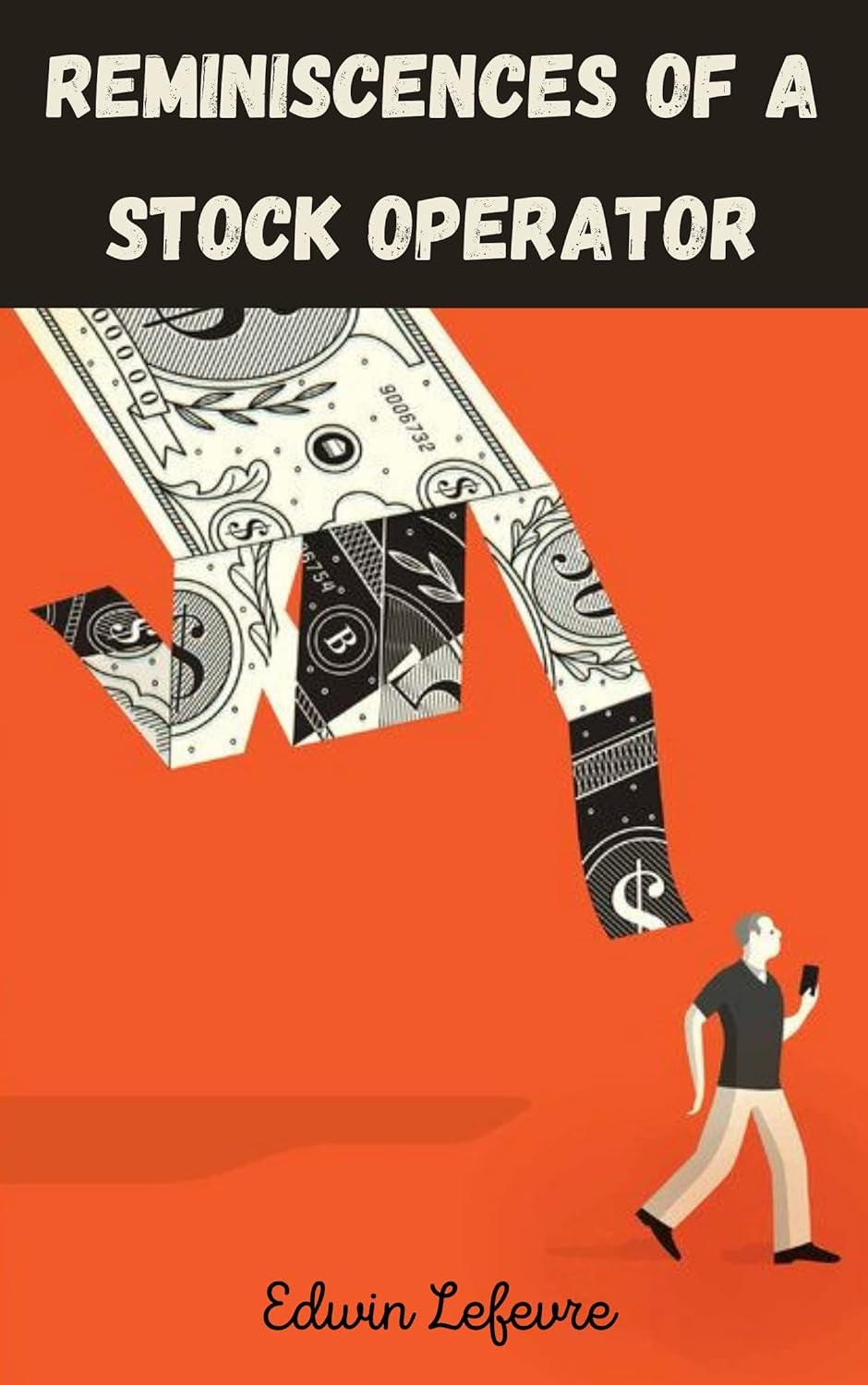
Reminiscences of a Stock Operator | Edwin Lefèvre
Reminiscences of a Stock Operator | Edwin Lefèvre
Couldn't load pickup availability
Edwin Lefèvre’s Reminiscences of a Stock Operator presents a compelling biographical narrative of Jesse Livermore’s ascent in financial markets. Chronicling his trajectory from a modest beginning at age fifteen through his emergence as a preeminent Wall Street figure, this globally coveted financial classic remains rich with storytelling and timeless market wisdom.
Book Overview & Speculative Odyssey
Featuring an extensive interview conducted by financial analyst Richard D. Wyckoff, the book explores the psychological dimensions of speculative trading, examining both formidable losses and remarkable recoveries. Whether tracking early days in illicit bucket shops or high-stakes maneuvers during historic panics like the San Francisco earthquake of 1906 and the Panic of 1907, the narrative delivers advanced trading concepts through high-stakes drama.
Key elements explored within this masterpiece of financial storytelling include:
- The thin line between market discipline, emotional control, and speculative ruin.
- Foundational maxims on risk management, trend-following, and sitting tight during macro-bull runs.
- The unchanging nature of human psychology across early 20th-century tape reading and modern digital markets.
- First-person insights into cornered markets, short-selling strategies, and tape-reading mastery.
About the Author
Edwin Lefèvre (1871–1943) was an American journalist, writer, and diplomat who served as the United States ambassador to Spain and Italy. As a sophisticated economic journalist for publications like the Saturday Evening Post, Lefèvre possessed a unique gift for translating complex financial maneuvers into captivating human stories, immortalizing Jesse Livermore’s trading philosophy in what became the most widely cited investment classic in history.
Core Audience & Intended Use
- Traders & Investors: Market participants across equities, options, and crypto seeking timeless psychological frameworks and risk management principles.
- Financial Historians: Readers interested in early Wall Street history, legendary market operators, and corporate financial evolution.
- Business Literature Enthusiasts: Anyone looking for engaging biographical narratives that merge high-stakes storytelling with invaluable economic insight.
Product Specifications
| Full Title | Reminiscences of a Stock Operator |
|---|---|
| Author(s) | Edwin Lefèvre |
| Publisher & Imprint | G&D Media |
| Publication Date | June 13, 2018 |
| Binding Format | Trade Paperback (PB) |
| Print Length | 210 Pages |
| Language | English |
| ISBN-13 / ISBN-10 | 9781722502690 / 1722502697 |
| Primary Genre (BISAC) | BUS036000 / BUSINESS & ECONOMICS / Investments & Securities / General |
| Sub-Genres (BISAC) | BUS023000 / BUSINESS & ECONOMICS / Corporate & Business History; BUS051000 / BUSINESS & ECONOMICS / Personal Finance / Investing; FICTION / Biographical |
| Item Condition | Pre-Owned / Very Good |
| Dimensions & Weight | 6.00 x 0.48 x 9.00 inches | 10.4 oz (approx. 0.65 lbs) |
Frequently Asked Questions About Reminiscences of a Stock Operator
Is this book an abstract academic textbook or a narrative work?
This is a highly propulsive, cinematic roman à clef and fictionalized biography. Written in the first person, it captures the raw, fast-paced world of early 20th-century financial speculation. Rather than forcing readers through dry formulas, it delivers advanced trading concepts through high-stakes gambling stories, cornered markets, and dramatic boardroom showdowns.
Who is the real-world financial titan masked under the protagonist's name?
While the book follows a character named Larry Livingston, it is a scrupulous, thinly veiled biography of Jesse Lauriston Livermore, one of the most legendary, volatile, and successful short-sellers in Wall Street history. Author Edwin Lefèvre based the entire narrative on an extensive series of deep, first-person interviews conducted with Livermore at the height of his market influence.
What is the main narrative hook and historical setting driving the plot?
The story begins in the late 19th century as a teenage Livingston starts working as a quotation-board boy in a New England stock brokerage. Discovering an uncanny mathematical ability to spot patterns in the tape, he begins gambling in illicit “bucket shops.” The narrative follows his high-momentum rise to New York City, tracking how he systematically made and lost multi-million-dollar fortunes during historic market panics, including the San Francisco earthquake of 1906 and the Panic of 1907.
What primary technical and psychological trading themes are explored in the text?
The text delivers a monumental investigation into market psychology, risk management, and human nature. Livermore introduces foundational market maxims that remain gospel today, such as the danger of averaging down a losing position, the necessity of sitting tight during a macro-bull trend, and recognizing that the market is never wrong. The book exposes how fear, greed, and hope systematically destroy traders who fail to manage their own emotions.
Why is this vintage 1923 text uniquely significant to the author's legacy and modern financial history?
This work represents an extraordinary milestone because it stands as the single most durable and frequently cited financial classic ever written, surviving over a century as required reading for elite Wall Street hedge fund managers. Edwin Lefèvre was a highly sophisticated economic journalist and diplomat who realized that while technology and corporate frameworks change, human psychology remains perfectly static. This book marks a major turning point in business literature where financial markets were analyzed not as cold mathematical machines, but as complex behavioral arenas. It successfully answers why Livermore's rules remain completely flawless today, proving that the exact same psychological traps that ruined traders in the bucket shops of the 1890s are what destroy retail crypto and options traders in the modern digital age.
Condition Notice: Pre-Owned / Second-Hand Product
All books, box sets, and multi-volume collections offered by Bust-Down Books are sold in pre-owned, used, and second-hand condition, unless explicitly designated as new in the individual product listing.
Condition Details & Grading:
- Previous Ownership: These items have been previously owned, handled, and read. As such, copies may exhibit typical signs of shelf wear, including but not limited to minor creasing, scuffing, edge wear, bent page corners, remainder marks, or spine softening. Paperback editions may show minor cover curling, spine creasing, or edge rubbing.
- Markings & Personalization: Items may occasionally contain inscriptions, library stamps, owner names, marginalia, or highlighting. Individual item descriptions reflect significant deviations from standard acceptable condition.
- Supplemental Materials: Secondary and digital components—such as publisher access codes, CD-ROMs, bonus inserts, registration keys, or workbook activity pages—are not guaranteed to be included, active, or unredeemed unless specifically stated in the product description.
First Sale Doctrine & Non-Affiliation Statement:
All items sold on this platform are original, lawfully acquired copies being resold under the protection of the First Sale Doctrine (codified under U.S. copyright law, 17 U.S.C. § 109, and applicable international equivalents permitting the secondary resale of lawfully manufactured goods).
Bust-Down Books, LTD. is an independent, secondary-market bookseller. We are not affiliated with, endorsed by, authorized by, or sponsored by the original authors, copyright holders, publishers, or trademark owners of the titles offered for sale. All registered trademarks, author names, book titles, and publisher imprints remain the sole property of their respective owners and are used strictly for nominative identification and descriptive purposes.
Share