Bust-Down Books
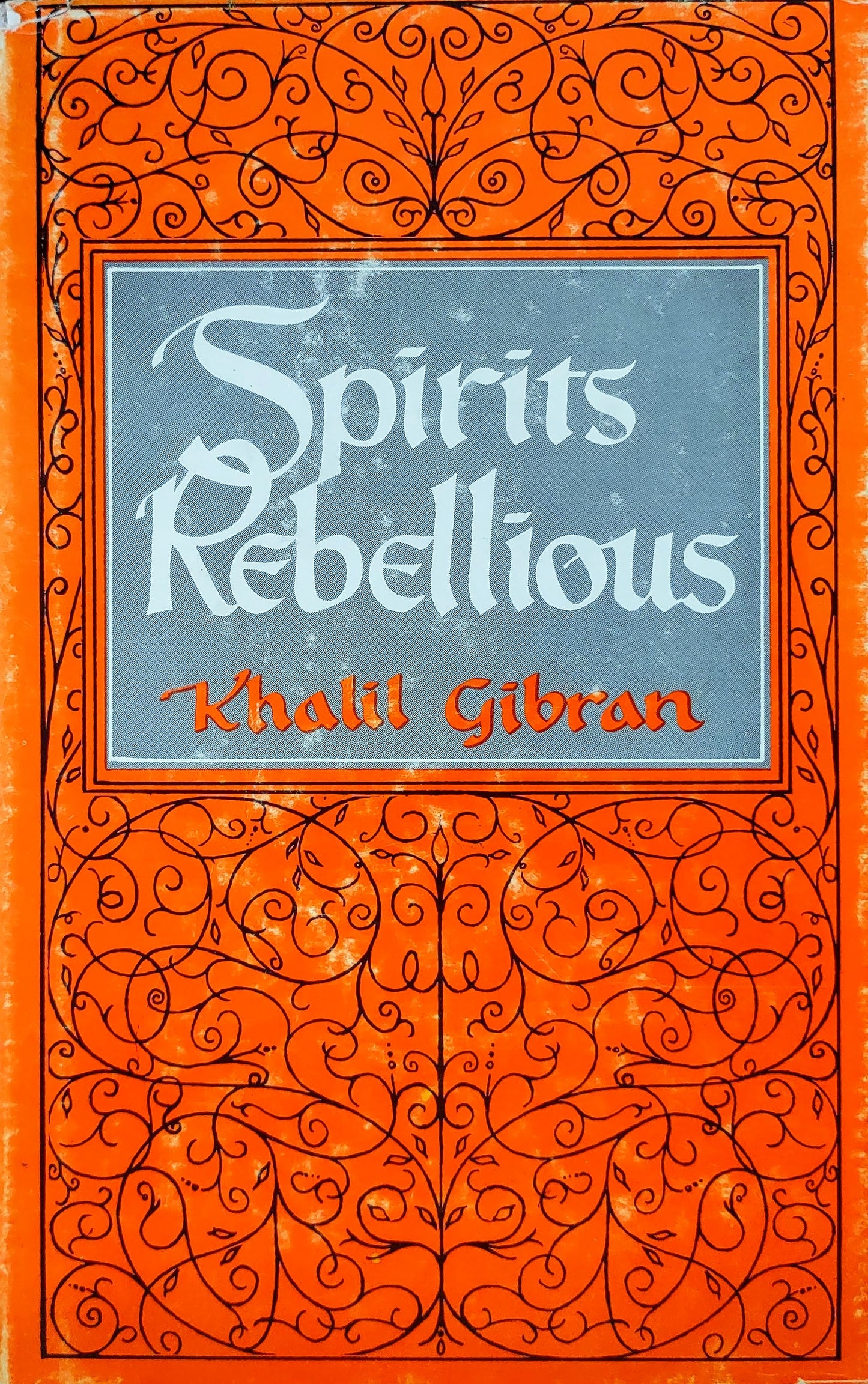
Spirits Rebellious | Khalil Gibran
Spirits Rebellious | Khalil Gibran
Couldn't load pickup availability
Translated from the Arabic by Anthony Rizcallah Ferris | Edited by Martin L. Wolf
Spirits Rebellious is a collection of essays and poems by Khalil Gibran, first published in 1908. The book explores themes of spirituality, freedom, and individualism. Gibran's writing is known for its lyrical prose and philosophical insights.
Summary:
When first published in the original Arabic, this book aroused considerable agitation and intrigue. It was burned publicly in the Beirut market place by furious church and state officials, who denounced it as poisonous and dangerous to the peace of the country.
Gibran himself was exiled.
But this was at a time when Lebanon was in virtual slavery to oppressive Turkish rule.
Years later his exile was remanded, and the church embraced him without conciliation on his part. Yet the record remains as Gibran wrote it here: his profoundly felt anger and indignant protest at the vicious inequality of man and woman in marriage—the wretched failure of the principles of law and justice—and the corrupt, thieving practices of religious administration in the Near East of his time.
From the Martin L. Wolf in Spirits Rebellious:
Soon after publication of the original Arabic of Spirits Rebellious at the turn of the century, considerable agitation and intrigue developed.
The book was publicly burned in the Beirut market place by furious church and state officials who adjudged it poisonous, and fiercely dangerous to the peace of the country.
Lebanon was then suffering virtual slavery under oppressive Turkish rule.
Gibran's bitter denunciation of both religious and political injustice prevailing at the time, brought also his anticipated exile from the country and excommunication from the church, although his parents were staunch Maronites.
It was the story Khalil the Heretic, in particular, which drove the Sultan and his Emirs into trepidation, and caused nervous authorities in the entire Middle and Near East to examine into their governments.
Gibran was quietly pursuing painting with his friend Rodin in Paris when he learned of the cere-monial destruction of his book, and he merely expressed the thought that it was excellent cause for the issuance of a second edition.
In 1908 his exile was remanded, and the church embraced him without conciliation on his part.
A mourner who witnessed the Gibran funeral procession in 1931, states that the ecclesiastical pageantry of the event was beyond description. Hundreds of priests and religious leaders, representing every denomination under Eastern skies, were in solemn attendance. Included were Maronites, Catholics, Shiites, Protestants,
Mohammedans, Greek Orthodox, Jews, Sunnites, Druzes, and others. And to render complete Gibran's restora-tion to the fold of religion, he was buried in the grotto of the Monastery of Mar Sarkis in Bsherri, his childhood church.
Share