

Bust-Down Books
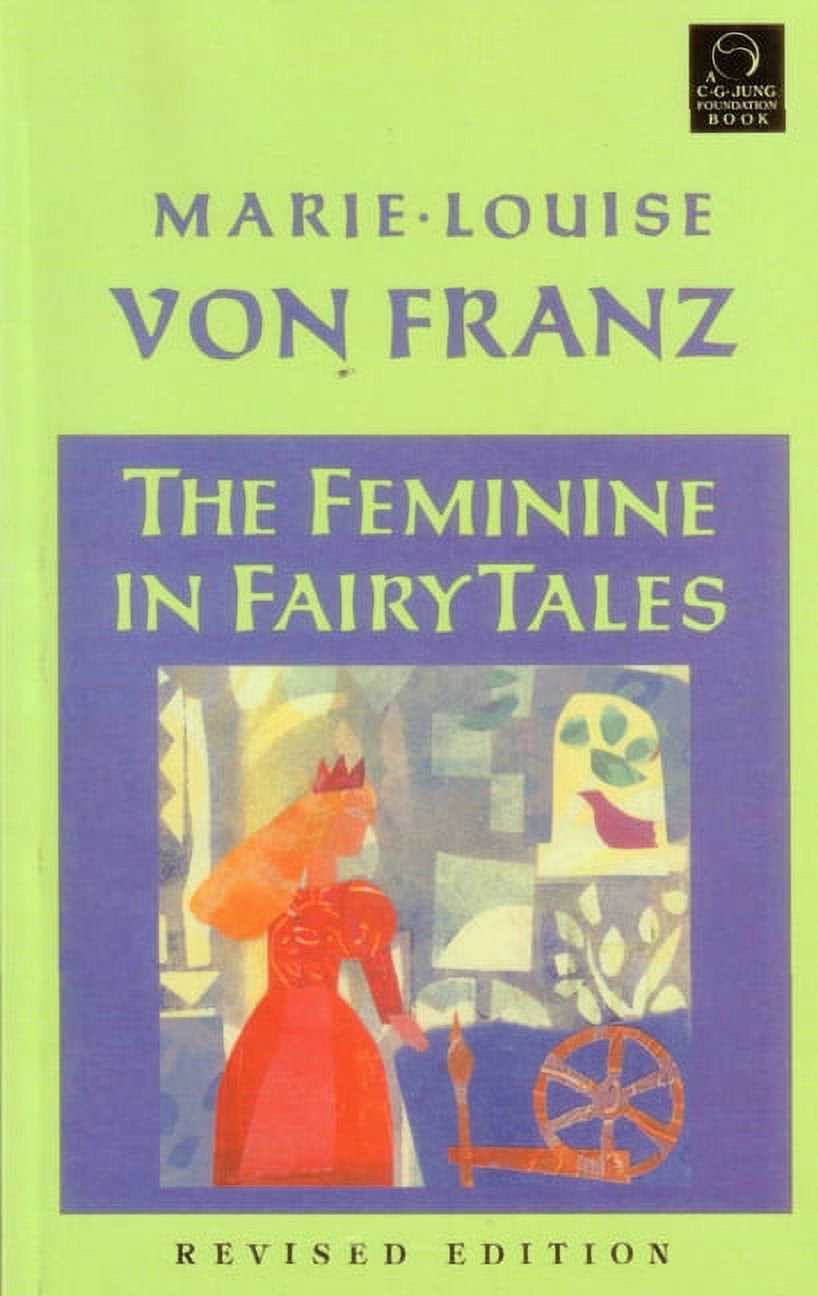
The Feminine in Fairy Tales: A C.G. Jung Foundation Book | Marie-Louise von Franz
The Feminine in Fairy Tales: A C.G. Jung Foundation Book | Marie-Louise von Franz
Couldn't load pickup availability
A Jungian psychologist explores what we can learn about women—and men—from the feminine archetypes, symbols, and themes found in fairy tales. In The Feminine in Fairy Tales: A C.G. Jung Foundation Book (Revised Edition), distinguished analyst and author Marie-Louise von Franz shows how the Feminine reveals itself in traditional stories of German, Russian, Scandinavian, and Eskimo origin.
Book Overview & Core Themes
Drawing upon extensive knowledge of Jungian psychology, Dr. von Franz discusses the archetypes and symbolic themes that appear in fairy tales as well as dreams and fantasies, drawing practical advice from the tales and demonstrating its application in case studies from her analytical practice.
Key areas examined within this work include:
- Insights into the psychology of women and the characteristics of the anima (the inner femininity of men).
- Analyses of familiar stories such as Sleeping Beauty, Snow White and Rose Red, and Rumpelstiltskin.
- Explorations of the anima/animus dynamic, shadow integration, the Great Mother archetype, and individuation.
- Practical applications of symbolic language derived from clinical case studies and dream interpretation.
About the Author
Marie-Louise von Franz (1915–1998) was a distinguished Swiss Jungian psychologist, scholar, and author. Widely recognized as Carl Jung's closest collaborator and hand-picked successor, she spent decades analyzing fairy tales, myths, and alchemical texts to map the structure of the human unconscious.
Core Audience & Intended Use
- Jungian & Depth Psychology Readers: Individuals exploring archetypal patterns, the collective unconscious, and individuation.
- Fairy Tale & Folklore Scholars: Researchers and readers seeking psychological interpretations of traditional oral stories.
- Women's Studies & Philosophy Enthusiasts: Students and thinkers investigating the feminine principle and cultural symbolism.
Product Specifications
| Full Title | The Feminine in Fairy Tales: A C.G. Jung Foundation Book (Revised Edition) |
|---|---|
| Author(s) | Marie-Louise von Franz |
| Publisher & Imprint | Shambhala Publications |
| Publication Date | May 23, 2000 (Revised Trade Paperback Profile) |
| Binding Format | Trade Paperback (PB) |
| Print Length | 240 Pages |
| Language | English |
| ISBN-13 / ISBN-10 | 9781570626098 / 157062609X |
| Primary Genre (BISAC) | PSY045050 / PSYCHOLOGY / Movements / Jungian |
| Sub-Genres (BISAC) | SOC028000 / SOCIAL SCIENCE / Women's Studies; LIT004260 / LITERARY CRITICISM / Fairy Tales & Folklore; PHI015000 / PHILOSOPHY / Mind & Body |
| Item Condition | Pre-Owned / Very Good |
| Dimensions & Weight | 6.00 x 0.65 x 9.00 inches | 11.2 oz (approx. 0.70 lbs) |
Frequently Asked Questions About The Feminine in Fairy Tales
What is the main narrative hook and core psychological premise driving the book?
The book serves as a profound structural investigation into how the human collective unconscious maps out the psychological development of the female psyche. Rather than treating folklore as simple children's entertainment, Marie-Louise von Franz cross-examines classic and obscure fairy tales from around the world to demonstrate that these ancient oral stories function as pristine blueprints depicting archetypal paths toward psychological wholeness.
What specific structural layout does the author use to unpack these folklore patterns?
Moving past fragmented structural lists, the text is organized as a series of deep, step-by-step case studies analyzing complete tales. Von Franz systematically breaks down distinct narrative arcs—such as the trials of the motherless heroine, the symbol of the sleeping princess, or the shadow of the wicked stepmother—showing how separate motifs represent specific stages of internal integration and the unmaking of personal psychological blockages.
What primary psychological and symbolic themes are explored in the text?
The text delivers a masterclass exploration into the anima/animus dynamic, shadow integration, the Great Mother archetype, and individuation. Von Franz unmasks the symbolic meaning of recurring fairy tale elements—such as magical animals, deep forests, gold, and spinning wheels—proving that these elements depict the ego’s confrontation with autonomous subconscious forces, mapping how an individual learns to balance instinctual nature with conscious awareness.
Does the text distinguish between a woman's personal psychology and archetypal patterns?
Yes, explicitly. The volume demonstrates that while fairy tales speak in universal, collective imagery, their archetypal structures apply directly to the everyday challenges of the individual. Von Franz outlines how cultural imbalances suppress vital aspects of the feminine principle, teaching readers how to utilize the symbolic language of dreams and myth to identify and repair these structural fractures in their own real-world lives.
Why is this book uniquely significant to the author, Marie-Louise von Franz, and her lifelong collaboration with Carl Jung?
This work represents an extraordinary milestone because it stands as the premier canonical manifestation of Marie-Louise von Franz’s legacy as Carl Jung’s hand-picked successor in the psychological interpretation of fairy tales. Von Franz began working directly with Jung at just eighteen years old, translating ancient Greek, Latin, and alchemical texts for his research. While Jung pioneered archetypal theory, it was von Franz who spent over thirty years conducting the exhaustive folklore cross-examinations required to prove that the structural patterns found inside global myths perfectly mirror the clinical dream cycles of modern psychiatric patients. This revised edition marks the definitive culmination of her life's work; it represents the precise moment where she moved completely out of Jung's shadow to establish her own independent authority, transforming ancient campfire stories into a battle-tested analytical playbook for serious psychological discovery and library collections worldwide.
Condition Notice: Pre-Owned / Second-Hand Product
All books, box sets, and multi-volume collections offered by Bust-Down Books are sold in pre-owned, used, and second-hand condition, unless explicitly designated as new in the individual product listing.
Condition Details & Grading:
- Previous Ownership: These items have been previously owned, handled, and read. As such, copies may exhibit typical signs of shelf wear, including but not limited to minor creasing, scuffing, edge wear, bent page corners, remainder marks, or spine softening. Trade paperback editions may show minor cover curling, spine creasing, or edge rubbing.
- Markings & Personalization: Items may occasionally contain inscriptions, library stamps, owner names, marginalia, or highlighting. Individual item descriptions reflect significant deviations from standard acceptable condition.
- Supplemental Materials: Secondary and digital components—such as publisher access codes, CD-ROMs, bonus inserts, registration keys, or workbook activity pages—are not guaranteed to be included, active, or unredeemed unless specifically stated in the product description.
First Sale Doctrine & Non-Affiliation Statement:
All items sold on this platform are original, lawfully acquired copies being resold under the protection of the First Sale Doctrine (codified under U.S. copyright law, 17 U.S.C. § 109, and applicable international equivalents permitting the secondary resale of lawfully manufactured goods).
Bust-Down Books, LTD. is an independent, secondary-market bookseller. We are not affiliated with, endorsed by, authorized by, or sponsored by the original authors, copyright holders, publishers, or trademark owners of the titles offered for sale. All registered trademarks, author names, book titles, and publisher imprints remain the sole property of their respective owners and are used strictly for nominative identification and descriptive purposes.
Share
Marie Louise Von Franz was the expert on fairy tales and their meaning, in particular from a Jungian point of view. Brilliant woman, brilliant writer, brilliant book. Can't recommend it enough if fairy tales are of interest.