Bust-Down Books
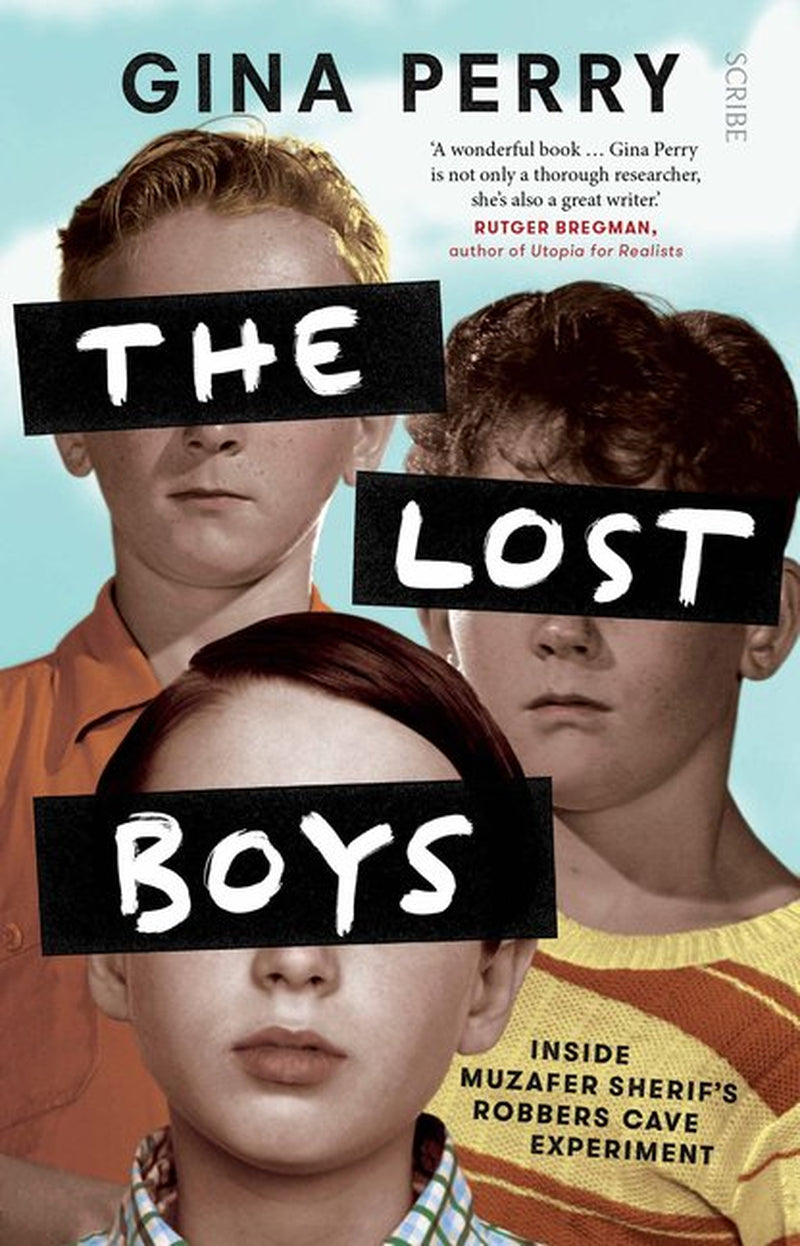
The Lost Boys: Inside Muzafer Sherif’s Robbers Cave Experiment | Gina Perry
The Lost Boys: Inside Muzafer Sherif’s Robbers Cave Experiment | Gina Perry
Couldn't load pickup availability
In 1954, a group of American boys attended a remote summer camp where they were split into two groups, and encouraged to bully, harass, and demonize each other. In The Lost Boys: Inside Muzafer Sherif’s Robbers Cave Experiment, Gina Perry charts the true story behind one of social psychology’s classic and most controversial studies.
Book Overview & Core Themes
Conducted at the height of the Cold War, the Robbers Cave experiment officially had a happy ending: the boys reconciled, demonstrating that cooperation and harmony can conquer hatred. Today it is proffered as proof that warring groups can make peace under the right conditions. Yet, as Perry explores, the true story is far more complex and chilling.
Key elements examined within this investigative history include:
- The hidden psychological abuse and experimental manipulation directed at unwitting children.
- Archival discoveries revealing suppressed failures and engineered hostilities from prior trials.
- Interviews with surviving subjects now in their 70s uncovering the personal toll of the ruse.
- A critical re-evaluation of mid-century scientific ethics and institutional oversight.
About the Author
Gina Perry is an Australian writer and psychologist. Her acclaimed work includes Behind the Shock Machine, an investigative study of Stanley Milgram’s obedience experiments. Perry specializes in dismantling the unvetted mythology of mid-century psychological research and restoring human agency to experimental subjects.
Core Audience & Intended Use
- Psychology & Sociology Scholars: Researchers analyzing research methodology, experimental ethics, and the history of social psychology.
- History of Science Enthusiasts: Readers seeking deep investigative dives into iconic mid-century scientific experiments.
- General Non-Fiction Readers: Individuals drawn to dramatic, narrative-driven exposés and biographical detective thrillers.
Product Specifications
| Full Title | The Lost Boys: Inside Muzafer Sherif’s Robbers Cave Experiment |
|---|---|
| Author(s) | Gina Perry |
| Publisher & Imprint | Scribe Publications (Distributed via Scribe US / Consortium Book Sales) |
| Publication Date | October 2, 2018 |
| Binding Format | Trade Paperback (PB) |
| Print Length | 352 Pages |
| Language | English |
| ISBN-13 / ISBN-10 | 9781947534605 / 1947534608 |
| Primary Genre (BISAC) | PSY041000 / PSYCHOLOGY / Social Psychology |
| Sub-Genres (BISAC) | HIS036060 / HISTORY / United States / 20th Century / Post-WWII; SCI034000 / SCIENCE / History; PSY024000 / PSYCHOLOGY / Research & Methodology |
| Item Condition | Pre-Owned / Very Good |
| Dimensions & Weight | 5.10 x 1.00 x 7.80 inches | 11.2 oz (approx. 0.70 lbs) |
Frequently Asked Questions About The Lost Boys
What is the main narrative hook and core psychological premise driving the book?
The book serves as a gripping, investigative unmasking of the famous 1954 Robbers Cave Experiment conducted by Turkish-American social psychologist Muzafer Sherif. The original experiment took two separate groups of eleven-year-old boys at a fake summer camp in Oklahoma and systematically engineered them into warring tribes (the Eagles and the Rattlers) to prove how easily tribal prejudice forms. Author Gina Perry tracks down the now-aging participants, revealing a dark, claustrophobic reality where children were subjected to hidden psychological abuse under the guise of objective science.
What specific structural layout does the author use to unpack this academic case?
Moving past standard text citations, the book uses an intensive journalistic expose and parallel narrative structural layout. The text fluidly alternates between Perry’s painstaking archival discovery of hidden, unreleased research files in academic basements and her emotional, present-day tracking and interviews with the original, unwitting test subjects, turning a dry academic milestone into a haunting biographical detective thriller.
What primary psychological and ethical themes are explored in the text?
The text delivers a profound investigation into experimental confirmation bias, systemic manipulation, and institutional trauma. Perry exposes how Sherif deliberately ignored or buried a previous, failed 1953 experiment in Middle Grove where the children refused to fight, actively manipulating the 1954 camp environment by sabotaging equipment, orchestrating thefts, and forcing hostility to validate his pre-existing structural theories on group conflict.
Did this critical re-evaluation of mid-century science receive major global acclaim?
Yes, exceptionally so. The Lost Boys achieved widespread critical acclaim from scientific journals, literary reviews, and historical societies globally. It was highly praised for its meticulous ethics analysis and was shortlisted for prestigious science-writing awards, permanently altering how the academic world evaluates foundational psychological canon alongside studies like the Stanford Prison Experiment.
Why is this book uniquely significant to the author, Gina Perry, and her career trajectory as a psychologist and writer?
This work represents an extraordinary milestone because it cements Gina Perry’s status as the premier investigative archeologist dismantling the dark, unvetted mythology of mid-century psychological experiments. Having previously achieved international acclaim unmasking Stanley Milgram’s shock experiments in Behind the Shock Machine, Perry—herself a distinguished Australian psychologist and journalist—realized that modern psychology textbooks had sanitized these historic studies, scrubbing out the human suffering. This book marks the definitive culmination of her mission to restore agency to the victims; she demonstrates that the exact same academic hubris and lack of structural oversight that allowed mid-century scientists to psychologically fracture children are what happen when science prioritizes high-concept performance over human ethics, transforming her investigative research into a universal manual on the necessity of transparency and moral boundaries in the study of human behavior.
Condition Notice: Pre-Owned / Second-Hand Product
All books, box sets, and multi-volume collections offered by Bust-Down Books are sold in pre-owned, used, and second-hand condition, unless explicitly designated as new in the individual product listing.
Condition Details & Grading:
- Previous Ownership: These items have been previously owned, handled, and read. As such, copies may exhibit typical signs of shelf wear, including but not limited to minor creasing, scuffing, edge wear, bent page corners, remainder marks, or spine softening. Trade paperback editions may show minor cover curling, spine creasing, or edge rubbing.
- Markings & Personalization: Items may occasionally contain inscriptions, library stamps, owner names, marginalia, or highlighting. Individual item descriptions reflect significant deviations from standard acceptable condition.
- Supplemental Materials: Secondary and digital components—such as publisher access codes, CD-ROMs, bonus inserts, registration keys, or workbook activity pages—are not guaranteed to be included, active, or unredeemed unless specifically stated in the product description.
First Sale Doctrine & Non-Affiliation Statement:
All items sold on this platform are original, lawfully acquired copies being resold under the protection of the First Sale Doctrine (codified under U.S. copyright law, 17 U.S.C. § 109, and applicable international equivalents permitting the secondary resale of lawfully manufactured goods).
Bust-Down Books, LTD. is an independent, secondary-market bookseller. We are not affiliated with, endorsed by, authorized by, or sponsored by the original authors, copyright holders, publishers, or trademark owners of the titles offered for sale. All registered trademarks, author names, book titles, and publisher imprints remain the sole property of their respective owners and are used strictly for nominative identification and descriptive purposes.
Share