Bust-Down Books
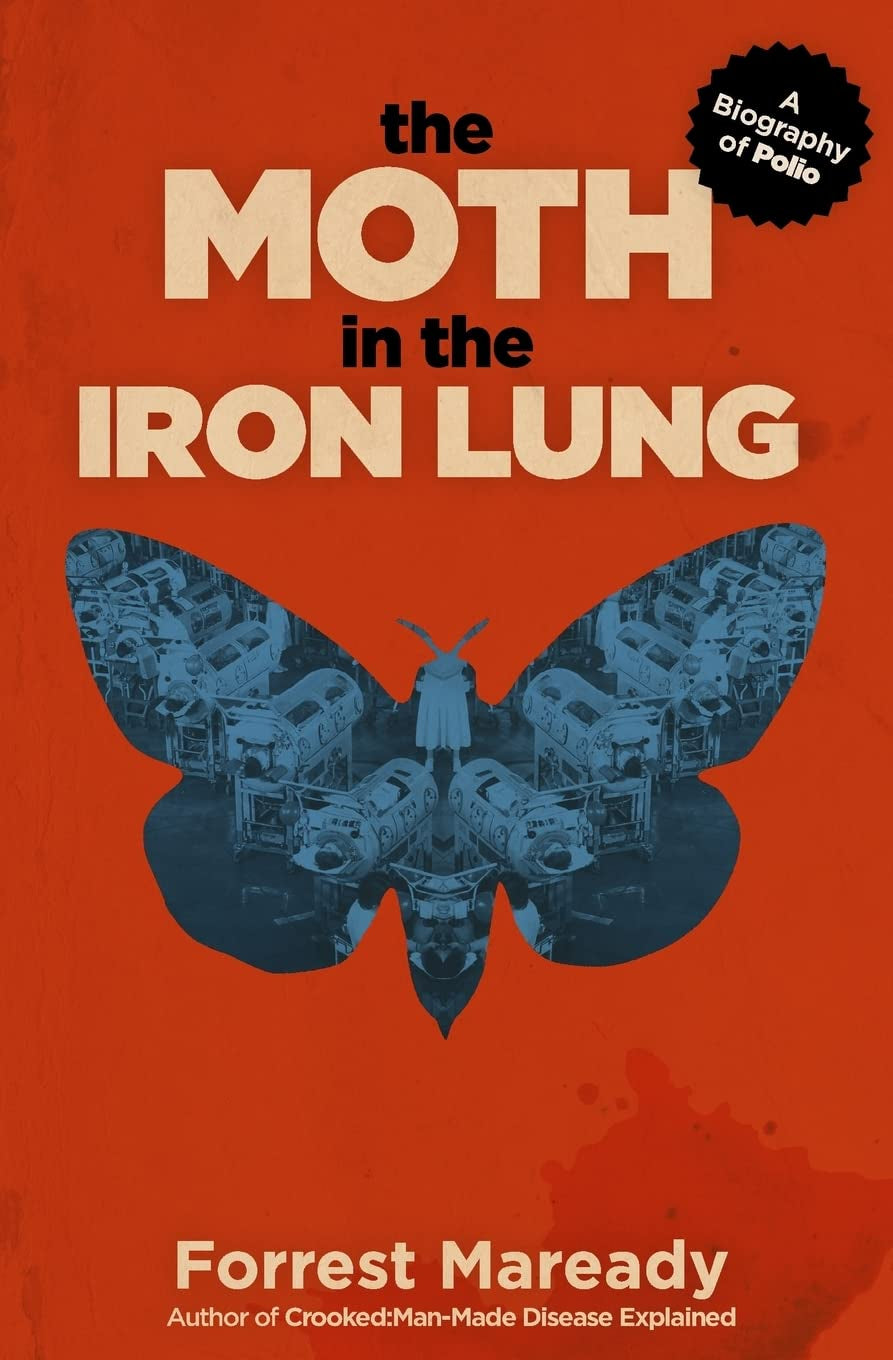
The Moth in the Iron Lung: A Biography of Polio | Forrest Maready
The Moth in the Iron Lung: A Biography of Polio | Forrest Maready
Couldn't load pickup availability
A fascinating account of the world’s most famous disease—polio—told as you have never heard it before. In The Moth in the Iron Lung: A Biography of Polio, Forrest Maready delivers a provocative investigation into the origins, history, and sudden disappearance of polio in the 20th century.
Book Overview & Core Themes
Epidemics of paralysis began to rage in the early 1900s, seemingly out of nowhere. Doctors, parents, and health officials were at a loss to explain why this formerly unheard-of disease began paralyzing so many children—usually starting in their legs before moving through the abdomen, arms, and respiratory muscles.
Key areas examined within this historical biography include:
- Historical milestones and early isolated outbreaks across rural Vermont and agricultural landscapes.
- Toxicological links to chemical pesticides like lead arsenate and Paris Green used against orchard insects.
- The controversial thesis on how heavy metal toxins stripped natural mucosal barriers and increased susceptibility.
- The institutional race between medical giants, public panic campaigns, and manufacturing oversight failures.
About the Author
Forrest Maready is an independent researcher, author, and investigative historian known for cross-examining orthodox medical and historical narratives through deep digital archives, historical doctor logs, and public health registries.
Core Audience & Intended Use
- History of Science & Medicine Enthusiasts: Readers seeking alternative perspectives and deep dives into 20th-century epidemiological history.
- Toxicology & Environment Researchers: Individuals exploring the historical impacts of agricultural chemicals and industrial exposures.
- Alternative Non-Fiction Readers: Fans of provocative, independent historical investigations that challenge mainstream consensus.
Product Specifications
| Full Title | The Moth in the Iron Lung: A Biography of Polio |
|---|---|
| Author(s) | Forrest Maready |
| Publisher & Imprint | Independently Published |
| Publication Date | June 5, 2018 |
| Binding Format | Trade Paperback (PB) |
| Print Length | 286 Pages (Includes integrated historical maps, diagrams, and document reproductions) |
| Language | English |
| ISBN-13 / ISBN-10 | 978-1717583673 / 1717583670 |
| Primary Genre (BISAC) | MED039000 / MEDICAL / History |
| Sub-Genres (BISAC) | HIS036060 / HISTORY / United States / 20th Century / General; SCI034000 / SCIENCE / History; MED022000 / MEDICAL / Epidemiology |
| Item Condition | Pre-Owned / Very Good |
| Dimensions & Weight | 6.00 x 0.65 x 9.00 inches | 13.6 oz (approx. 0.85 lbs) |
Frequently Asked Questions About The Moth in the Iron Lung
What is the main narrative hook and core medical premise driving the book?
The book serves as a provocative, gripping historical mystery that re-evaluates the conventional timeline of the poliomyelitis epidemics. Forrest Maready tracks how an obscure, mild gastrointestinal virus that had existed harmlessly in the human biome for millennia suddenly mutated into a terrifying, paralyzing monster at the turn of the 20th century. The plot centers on a radical cross-disciplinary investigation, arguing that the explosive rise of paralytic polio was deeply tied to a massive, overlooked environmental catalyst.
What specific structural layout does the author use to trace the history?
Moving past the dry, sterile formatting of traditional medical textbooks, the narrative is organized into a highly dramatic, chronological investigative detective script. The book systematically guides readers through separate historical milestones—shifting seamlessly between early, isolated outbreaks in rural Vermont, the toxic landscapes of late 19th-century agriculture, and the high-stakes laboratories of early virologists—using old doctor logs, newspaper archives, and public health registries to build its case.
What primary environmental and chemical themes are explored in the text?
The text delivers a profound investigation into toxicology, agricultural engineering, and systemic environmental exposures. Maready explores the historical introduction of aggressive chemical pesticides, focusing heavily on lead arsenate and Paris Green used to combat the codling moth in orchards. The narrative introduces the controversial thesis that widespread exposure to these heavy metal toxins stripped away the body’s natural mucosal barriers, leaving the central nervous system uniquely vulnerable to the otherwise benign polio virus.
Does the narrative examine the corporate race to engineer the polio vaccine?
Yes, explicitly. The final chapters detail the intense, multi-million-dollar institutional race between medical giants like Jonas Salk and Albert Sabin. Rather than offering a standard public-relations piece, the text analyzes the complex behind-the-scenes legal disputes, massive public panic campaigns, and manufacturing oversight failures (such as the Cutter Incident), giving readers an unvarnished look at the birth of the modern industrial medical complex.
Why is this book uniquely significant to the author's lifelong legacy and his approach to historical research?
This work represents an extraordinary milestone because it stands as the premier creative manifestation of Forrest Maready’s career spent cross-examining orthodox historical narratives via deep digital archives. Lacking a traditional institutional background, Maready approaches history with the unvetted independence of an investigative archeologist. This book marks a critical turning point in alternative medical literature by answering a vital epidemiological question: why a disease that historically spiked in clean, affluent suburban neighborhoods during fruit harvest season was misdiagnosed as a basic contagious hygiene crisis. Maready brilliantly demonstrates that the tools of macro-historical research and industrial toxicological tracking are exactly what is required to challenge long-standing assumptions, transforming his independent research into an essential, highly debated cornerstone volume for alternative science libraries and serious analytical collections.
Condition Notice: Pre-Owned / Second-Hand Product
All books, box sets, and multi-volume collections offered by Bust-Down Books are sold in pre-owned, used, and second-hand condition, unless explicitly designated as new in the individual product listing.
Condition Details & Grading:
- Previous Ownership: These items have been previously owned, handled, and read. As such, copies may exhibit typical signs of shelf wear, including but not limited to minor creasing, scuffing, edge wear, bent page corners, remainder marks, or spine softening. Trade paperback editions may show minor cover curling, spine creasing, or edge rubbing.
- Markings & Personalization: Items may occasionally contain inscriptions, library stamps, owner names, marginalia, or highlighting. Individual item descriptions reflect significant deviations from standard acceptable condition.
- Supplemental Materials: Secondary and digital components—such as publisher access codes, CD-ROMs, bonus inserts, registration keys, or workbook activity pages—are not guaranteed to be included, active, or unredeemed unless specifically stated in the product description.
First Sale Doctrine & Non-Affiliation Statement:
All items sold on this platform are original, lawfully acquired copies being resold under the protection of the First Sale Doctrine (codified under U.S. copyright law, 17 U.S.C. § 109, and applicable international equivalents permitting the secondary resale of lawfully manufactured goods).
Bust-Down Books, LTD. is an independent, secondary-market bookseller. We are not affiliated with, endorsed by, authorized by, or sponsored by the original authors, copyright holders, publishers, or trademark owners of the titles offered for sale. All registered trademarks, author names, book titles, and publisher imprints remain the sole property of their respective owners and are used strictly for nominative identification and descriptive purposes.
Share