Bust-Down Books
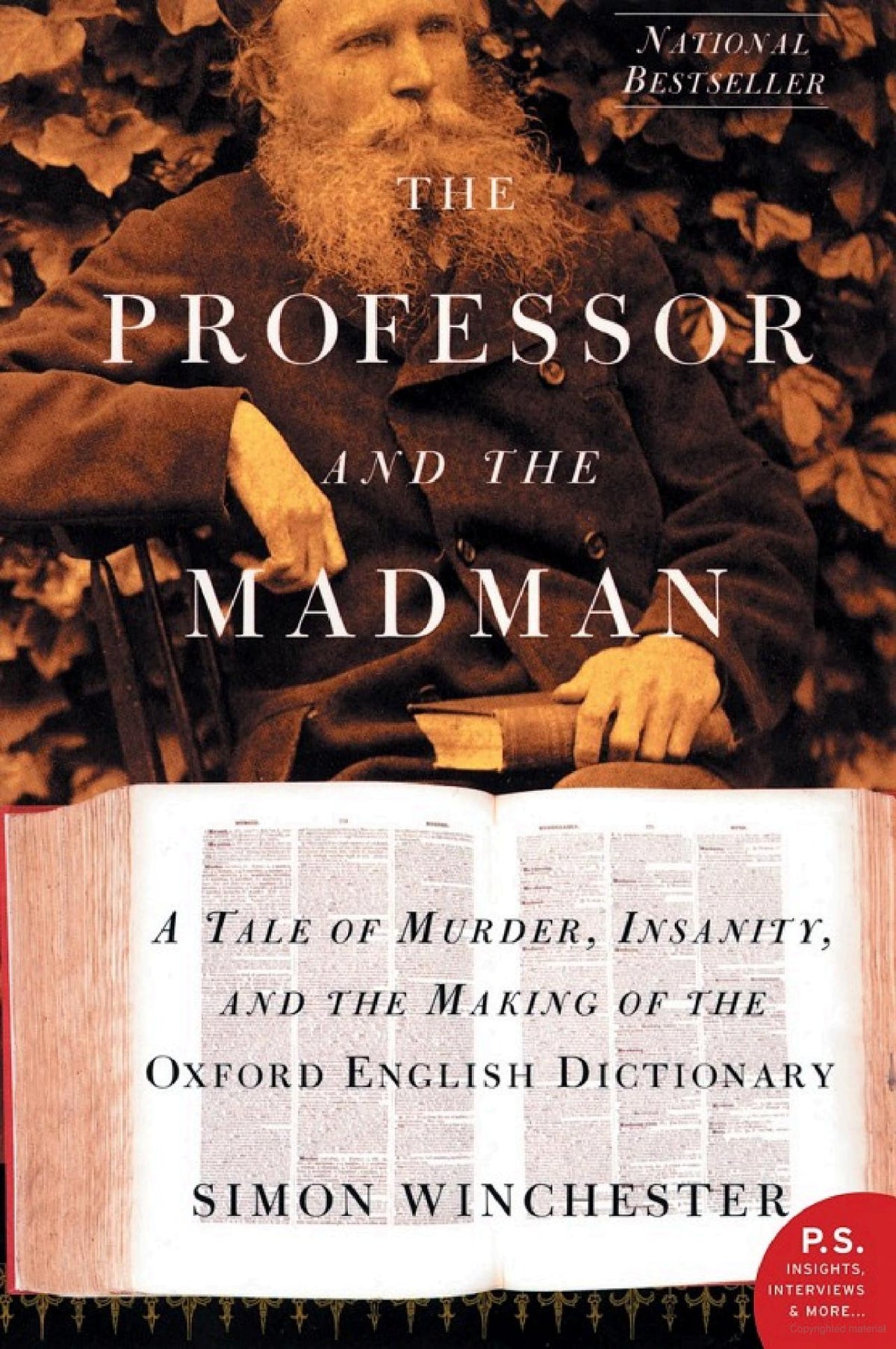
The Professor and the Madman: A Tale of Murder, Insanity, and the Making of the Oxford English Dictionary | Simon Winchester
The Professor and the Madman: A Tale of Murder, Insanity, and the Making of the Oxford English Dictionary | Simon Winchester
Couldn't load pickup availability
A New York Times Notable Book & National Book Critics Circle Award Finalist. In The Professor and the Madman: A Tale of Murder, Insanity, and the Making of the Oxford English Dictionary, Simon Winchester unveils the fascinating true story behind one of the most ambitious literary projects in history.
Book Overview & Core Themes
The Oxford English Dictionary began in 1857, took seventy years to complete, and ultimately organized the English language into 414,825 precise definitions. Behind this monumental achievement lies an extraordinary story of genius, madness, and an unlikely friendship that helped shape modern linguistics.
Key areas examined within this work include:
- The collaboration between Professor James Murray, the brilliant editor of the OED, and Dr. William Chester Minor, a prolific contributor locked away in Broadmoor Asylum.
- The fine line between genius and insanity, the redemptive power of language, and the psychological scars of war.
- Meticulously researched historical drama blending true crime, biography, and lexicographical history.
- The mechanics of tracking historical word definitions across Victorian England and global volunteer networks.
About the Author
Simon Winchester is an acclaimed author and journalist. The Professor and the Madman stands as the defining, breakout masterpiece that permanently established him as a global powerhouse of narrative non-fiction, renowned for turning forgotten micro-histories into spellbinding classics.
Core Audience & Intended Use
- History & True Crime Readers: Individuals fascinated by Victorian-era mysteries, real-life drama, and historical non-fiction.
- Language & Lexicography Enthusiasts: Readers exploring the evolution of the English language and the creation of the OED.
- Psychology & Biography Fans: Followers of deep psychological narratives examining trauma, genius, and institutional confinement.
Product Specifications
| Full Title | The Professor and the Madman: A Tale of Murder, Insanity, and the Making of the Oxford English Dictionary |
|---|---|
| Author(s) | Simon Winchester |
| Publisher & Imprint | Harper Perennial (HarperCollins Publishers) |
| Publication Date | August 2, 2005 (Trade Paperback Edition) |
| Binding Format | Trade Paperback (PB) |
| Print Length | 272 Pages (Includes 16 extra P.S. Edition pages) |
| Language | English |
| ISBN-13 / ISBN-10 | 9780060839789 / 0060839783 |
| Primary Genre (BISAC) | HIS014000 / HISTORY / Europe / Great Britain / Victorian Era |
| Sub-Genres (BISAC) | LAN014000 / LANGUAGE ARTS & DISCIPLINES / Lexicography; BIO014000 / BIOGRAPHY; PSY022040 / PSYCHOLOGY |
| Item Condition | Pre-Owned / Very Good |
| Dimensions & Weight | 5.31 x 0.61 x 8.00 inches | 8.0 oz (approx. 0.50 lbs) |
Frequently Asked Questions About The Professor and the Madman
What is The Professor and the Madman by Simon Winchester actually about?
The book serves as a fascinating, bizarre true-crime history tracking the unlikeliest intellectual collaboration in literary history. Simon Winchester uncovers the hidden genesis of the Oxford English Dictionary (OED), focusing on how its brilliant, overwhelmed editor, Professor James Murray, relied on a massive volunteer network of word collectors—only to discover that his most prolific, elite contributor was Dr. William Chester Minor, a retired American Civil War surgeon locked away in a British criminal lunatic asylum for a brutal street murder.
How is the history of the Oxford English Dictionary told in this book? Is it a difficult read?
It is an incredibly propulsive, highly atmospheric read formatted like a combination of a gothic psychological thriller and a historical biography. Winchester bypasses dry linguistic checklists to masterfully plunge the reader directly into the thick, pea-soup fogs of Victorian London and the clinical confines of Broadmoor Asylum. The prose flows seamlessly, alternating between the meticulous, slow-burn mechanics of tracking historical word definitions and the shocking, graphic realities of wartime trauma and madness.
What are the main underlying messages or themes in The Professor and the Madman?
The text delivers a profound investigation into the fine line between genius and insanity, the redemptive power of language, and the scars of war. Winchester explores how Dr. Minor’s terrifying paranoid delusions—initially triggered by the horrors he witnessed as a Union surgeon—were temporarily neutralized by the rigid, comforting discipline of dictionary research. The narrative serves as a moving monument to how a shared obsession with literature can bridge the massive gap between a respectable academic tower and a criminal cell.
Did The Professor and the Madman win any awards or get adapted into a movie?
Yes, significantly. The book became an instant, roaring global bestseller that spent over a year on the New York Times Bestseller list. Following decades of cinematic development, it was adapted into a major 2019 Hollywood feature film starring Mel Gibson as Professor James Murray and Academy Award-winner Sean Penn as Dr. William Chester Minor, visually capturing the book's intense psychological and historical drama.
Why did Simon Winchester write this book, and what makes it special to his career?
This work represents an extraordinary milestone because it stands as the defining, breakout masterpiece that permanently established Simon Winchester as a global powerhouse of narrative non-fiction. Before its publication, Winchester was a respected foreign correspondent and travel writer, but this volume marks the exact turning point where his specialized talent for extracting forgotten micro-histories and spinning them into spellbinding epics captured the mainstream public imagination. He demonstrated that the exact same investigative tools required to cover real-world conflicts are what allowed him to crack open a century-old academic secret, transforming dry dictionary archives into a permanent, highly prized classic for global libraries.
Condition Notice: Pre-Owned / Second-Hand Product
All books, box sets, and multi-volume collections offered by Bust-Down Books are sold in pre-owned, used, and second-hand condition, unless explicitly designated as new in the individual product listing.
Condition Details & Grading:
- Previous Ownership: These items have been previously owned, handled, and read. As such, copies may exhibit typical signs of shelf wear, including but not limited to minor creasing, scuffing, edge wear, bent page corners, remainder marks, or spine softening. Trade paperback editions may show minor cover curling, spine creasing, or edge rubbing.
- Markings & Personalization: Items may occasionally contain inscriptions, library stamps, owner names, marginalia, or highlighting. Individual item descriptions reflect significant deviations from standard acceptable condition.
- Supplemental Materials: Secondary and digital components—such as publisher access codes, CD-ROMs, bonus inserts, registration keys, or workbook activity pages—are not guaranteed to be included, active, or unredeemed unless specifically stated in the product description.
First Sale Doctrine & Non-Affiliation Statement:
All items sold on this platform are original, lawfully acquired copies being resold under the protection of the First Sale Doctrine (codified under U.S. copyright law, 17 U.S.C. § 109, and applicable international equivalents permitting the secondary resale of lawfully manufactured goods).
Bust-Down Books, LTD. is an independent, secondary-market bookseller. We are not affiliated with, endorsed by, authorized by, or sponsored by the original authors, copyright holders, publishers, or trademark owners of the titles offered for sale. All registered trademarks, author names, book titles, and publisher imprints remain the sole property of their respective owners and are used strictly for nominative identification and descriptive purposes.
Share