Bust-Down Books
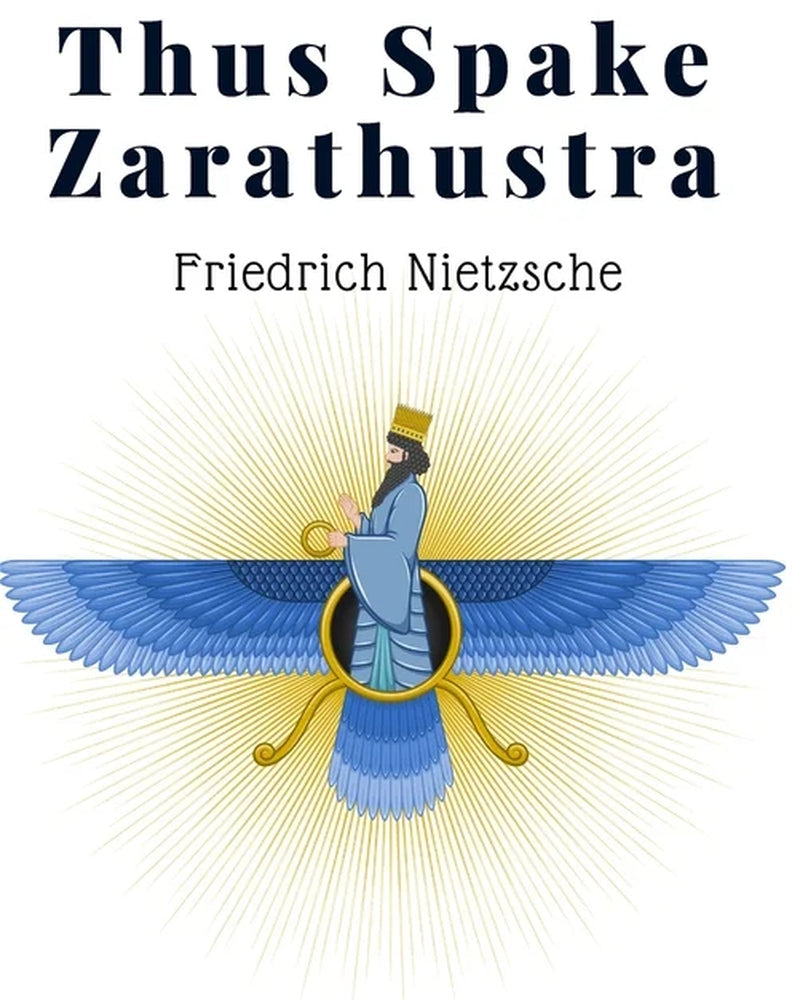
Thus Spoke Zarathustra | Friedrich Nietzsche
Thus Spoke Zarathustra | Friedrich Nietzsche
Couldn't load pickup availability
Thus Spake Zarathustra: A Book For All And None
Extended Synopsis
In the monumental philosophical masterpiece Thus Spake Zarathustra: A Book For All And None, iconic cultural critic and philologist Professor Friedrich Nietzsche analyzes the structural parameters of anti-metaphysical discourse, the tactical implementation of allegorical prose poetry, and the systemic deconstruction of Judeo-Christian moral architecture. Published in this highly accessible 276-page trade paperback configuration by Atlas Vista Publisher, this work operates as the ultimate blueprint for psychological and existential liberation. Nietzsche establishes an unyielding philosophical thesis: the historical announcement that “God is dead” requires humanity to completely abandon inherited transcendental comforting illusions and systematically engineer its own values, evolving from reactive herd-like conformity into the self-governing sovereignty of the Übermensch (Overman).
Rather than arranging the conceptual material through conventional academic argumentation, the text coordinates Zarathustra's psychological and spiritual journey across precise operational and allegorical pillars. The paradigm of the death of God and the three metamorphoses establishes the primary metaphysical baseline. The narrative opens with the prophet Zarathustra descending from his ten-year mountain solitude to share his wisdom with humanity, only to find a populace spiritually numbed by commercialism and dead dogma. Nietzsche outlines the structural evolutionary pathway of the human spirit through the famous allegory of the three metamorphoses: the spirit must first become a camel to bear the crushing weight of tradition; then transform into a lion to destroy the tyrannical moral mandate of “Thou Shalt”; and finally evolve into a child—representing a pristine, self-actualizing blank slate capable of creating an absolute new system of values.
Shifting away from passivity and traditional pity, the architecture of the will to power and class struggle analyzes the core driving force behind all organic life. Zarathustra explicitly rejects both democratic egalitarianism and the manipulative constraints of institutionalized religion, framing them as sophisticated psychological mechanisms designed by the weak to restrain the creative output of the strong. The narrative achieves its ultimate peak by grappling with the eternal recurrence of the same. This concept demands that an individual must live their life in such a perfectly deliberate, authentic manner that they would actively desire every joy, sorrow, and minute detail to repeat in an endless loop for all eternity. This premium Atlas Vista edition remains an indispensable reference resource for university philosophy libraries and existential theory research archives.
Accolades & Praise
“A volcanic breakthrough in Western thought. Nietzsche's prose poem completely shatters the metaphysical foundations of conventional morality, offering an uncompromising blueprint for human transcendence.”
— The Continental Philosophy Review
Author Biography
Friedrich Nietzsche (1844–1900) was a nineteenth-century German philosopher, cultural critic, philologist, and poet whose work has exerted a profound influence on modern intellectual history. Holding the chair of classical philology at the University of Basel at age 24, Nietzsche later embarked on a period of solitary writing, producing revolutionary texts that dismantled traditional Western metaphysics, religion, and morality, laying the groundwork for existentialism, postmodernism, and psychoanalysis.
Reader Targeting
- Students, academics, and researchers specializing in continental philosophy, existentialism, nineteenth-century intellectual history, and sociology.
- Analytical readers seeking to explore the psychological mechanics of self-actualization, individual sovereignty, and the sublimation of human drive.
- University libraries, philosophical repositories, and classical literature collections seeking an authoritative modern edition.
Bibliographic & Physical Specifications
| Publisher & Imprint | Atlas Vista Publisher |
|---|---|
| Publication Date | May 18, 2023 |
| Format & Binding | Trade Paperback (Radical Philosophy for Modern Times Edition / First Printing Thus; standard trade perfect binding with a highly flexible softcover cardstock casing and a durable matte protective laminate finish) |
| ISBN-13 / ISBN-10 | 9781805475460 / 1805475469 |
| Page Count | 276 pages (Includes complete four-part philosophical prose poem cycle, conceptual speech blocks, and historical publishing notes) |
| Dimensions & Weight | 11.00 x 8.00 x 1.00 inches | 14.4 oz (0.90 lbs / 408 grams) |
| BISAC Categories | PHILOSOPHY / History & Surveys / Modern PHILOSOPHY / Existentialism PHILOSOPHY / Religious |
Frequently Asked Questions
What are the three metamorphoses of the spirit described by Zarathustra?
Nietzsche outlines the evolutionary pathway of the human spirit using three allegorical stages: the camel (which bears the weight of traditional obligations), the lion (which rebels against external moral mandates), and the child (which serves as an unburdened, self-actualizing blank slate capable of engineering new values).
What is the core strategic premise of the "Eternal Recurrence"?
The Eternal Recurrence functions as a profound psychological thought experiment. It demands that an individual live with such absolute authenticity and absolute intention that they would enthusiastically choose to repeat every moment, choice, and detail of their life in an infinite loop for all eternity.
Bust-Down Books: More Than a Bookstore
Share